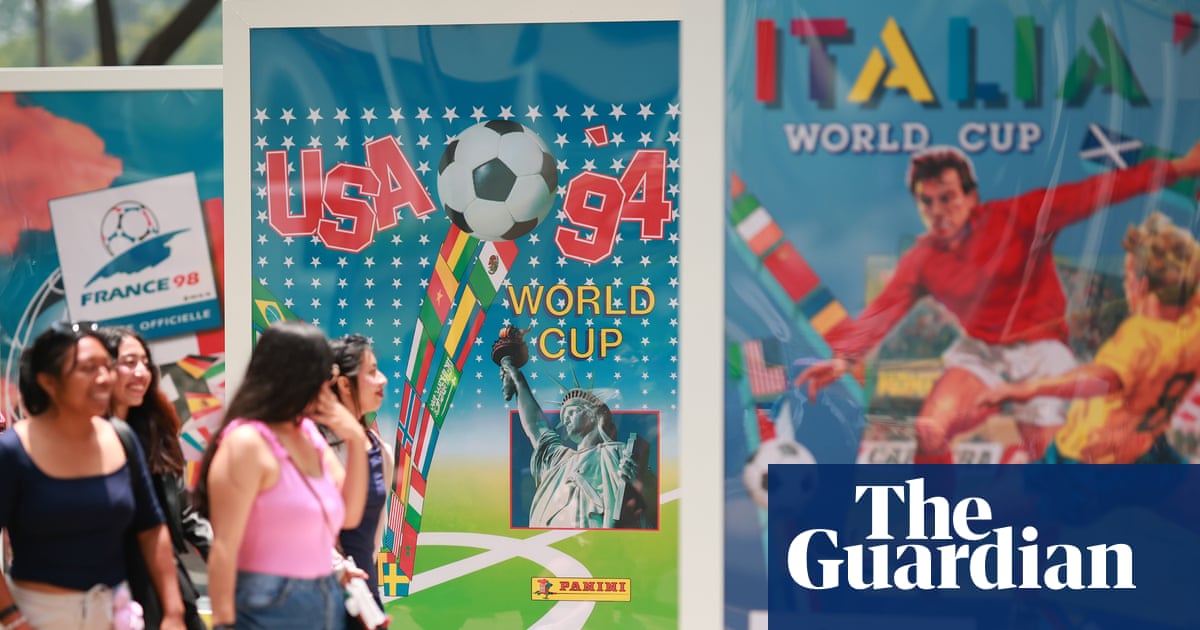
"With the final piece in place, it's now worth thousands of pounds, but he has no interest in selling it. Butler was moving house five years ago when he stumbled across a box in the loft that he had not thought about in years. Inside was his old school cap, some exercise books, photos and, in the middle of it all, a 1970 Panini World Cup sticker book."
"The 1970 World Cup meant everything to Stephen at the time. He was a 13-year-old boy in the Ribble valley, Lancashire watching England play in colour for the first time, in Mexico City of all places. They had entered the tournament as cup holders, having beaten West Germany in the 1966 finals, which only added to the excitement. It was in colour, it was live, it was the other side of the world."
"First and foremost was his concern for the players and how they would hold up in the heat, but as he flicked through the Panini sticker book he also reminisced on his favourites Pele and Jairzinho playing for Brazil in the final, Italian players such as Boninsegna and Facchetti, who impressed him if only with their exotic names."
"Back then, Butler paid five pre-decimalisation pennies for a pack of four stickers at the tobacconist or sweet shop. But as he flicked through the book as an adult, he noticed something: a sticker was missing. It wasn't a player, but a country: Chile had a sticker they earned for hosting the World Cup in Santiago, 1962, and Butler had not managed to find it in 1970."
A collector found an old school cap, exercise books, photos, and a 1970 Panini World Cup sticker book while moving house. The book triggered memories of watching England in the 1970 World Cup in colour from Mexico City, with excitement heightened by England’s status as 1966 cup holders. The collector remembered concerns about players handling the heat and recalled favourite Brazilian players Pele and Jairzinho, along with Italian players Boninsegna and Facchetti. Stickers were bought for a few pennies in 1970, and the collector later noticed a missing sticker for Chile, earned for hosting the 1962 World Cup. The final piece was eventually found, completing the collection and making it worth thousands of pounds, though it will not be sold.
Read at www.theguardian.com
Unable to calculate read time
Collection
[
|
...
]