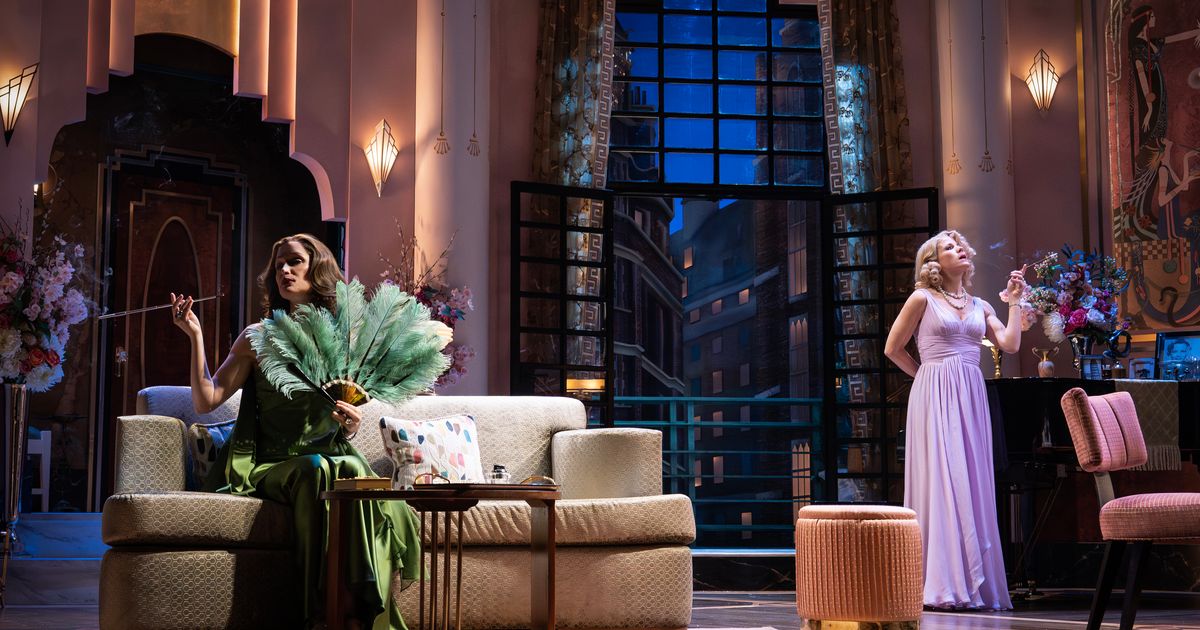
"In 1925, Mussolini took over Italy and Hitler published Mein Kampf. If the very successful 25-year-old Coward had been caught with a man, he could have been jailed or chemically castrated."
"Fallen Angels itself - about a pair of witty, worldly besties who get blitzed on champagne while considering cheating on their husbands with a mutual old flame - landed its author in trouble with the censors in London."
"If - to borrow from Oscar Wilde - the measure of a farce isn't whether it's good or bad, but whether it's charming or tedious, then Fallen Angels is still more than capable of seducing us out of seriousness."
"Coward, like his contemporary P. G. Wodehouse, hardly lets a beat go by without a chuckle. Even his square characters converse as if they're tennis pros playing a friendly."
Fallen Angels, a 1925 play by Noël Coward, is revived on Broadway with a focus on fun rather than heavy themes. The production features a vibrant set and lively jazz, creating an atmosphere of carefree enjoyment. The play centers on two friends contemplating infidelity while drinking champagne, reflecting Coward's wit and charm. Despite the serious historical context of its creation, the revival emphasizes the importance of farce as a means of escape from societal pressures and puritanism, showcasing Coward's comedic brilliance.
Read at Vulture
Unable to calculate read time
Collection
[
|
...
]