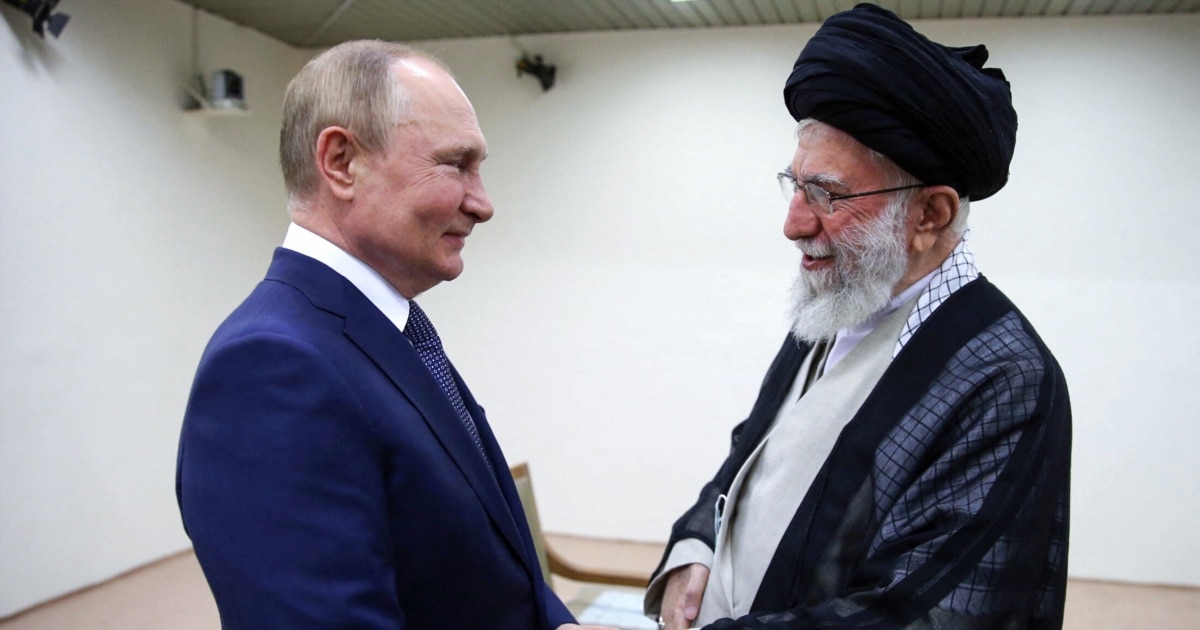
"There are a lot of similarities, because Iran has watched the [US special envoy Steve] Witkoff playbook over the past year or so with Russia. The Iranians know what they can get away with. They know how to drag the discussions out, make it look like Trump is achieving something, when in reality, he'll achieve nothing. And they have learned this from the Russians."
"Both Moscow and Tehran want sanctions relief before making major concessions. Is that diplomacy or leverage politics dressed up as diplomacy? Coffey: From their point of view, it makes sense to sequence it this way. They're going to ask for this whether or not the Trump administration will lift sanctions beforehand remains to be seen."
"If I was Iran or Russia, I would want international sanctions lifted. I would want frozen assets released. But it would be a mistake to do so at this point because Russia is the aggressor here. In the case of Iran, Iran has a 47-year track record of conducting terrorism across the region,"
Iran’s responses to peace proposals show parallels with Russia’s negotiation approach over Ukraine. Talks are prolonged while demands are hardened privately, and meaningful commitments are avoided while diplomacy appears to continue. Iran seeks sanctions relief before major concessions, treating sequencing as leverage rather than straightforward diplomacy. The strategy relies on knowing how long discussions can be dragged out and how to present progress publicly without delivering substantive outcomes. Russia’s actions are framed as aggression, making early sanctions relief and frozen-asset releases premature. Iran’s long record of regional terrorism is cited as a reason to be cautious about concessions before changes in behavior.
Read at RadioFreeEurope/RadioLiberty
Unable to calculate read time
Collection
[
|
...
]