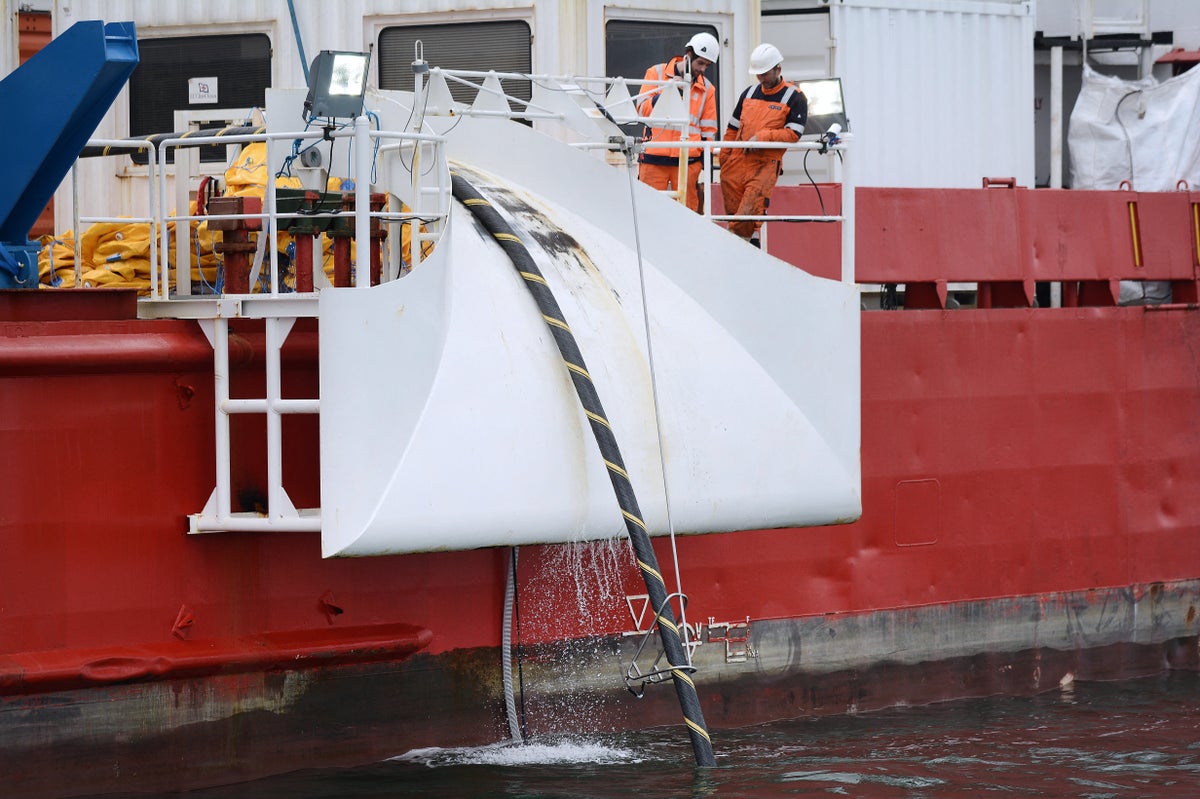
Iranian officials have proposed imposing fees on fiber-optic cables beneath the Strait of Hormuz and granting Iranian firms control over maintenance and repair. The cables carry less than 1% of global international bandwidth, and the network is designed to route around routine failures. Greater risk comes from the small, aging fleet of specialized ships that repair cables when they break. Industry investment has risen to about $4–$5 billion annually for new cable construction, but maintenance ship fleet investment has lagged. Some repair ships perform very few repairs and remain idle, while demand is higher in other regions. The system relies on around 60 specialized vessels, with fewer than 20 dedicated solely to repair, and 150–200 cable faults occur each year.
"Iranian officials and state-linked media floated plans in May to impose fees on fiber-optic cables beneath the strait and to hand Iranian firms control over their maintenance and repair. Yet those cables currently carry less than 1 percent of global international bandwidth, according to TeleGeography, a telecom research firm, and the network as a whole is engineered to route around routine failures."
"More vulnerable, though, is the small, aging global fleet of ships that fixes the cables when they break. The seafloor Internet is built to absorb damage, but its repair system has far less slack. The industry now sees some $4 billion to $5 billion in annual investment, close to double what it was a decade ago, driven by a building boom in new cables."
"“We have a lack of investment in the maintenance ship fleet,” says Mike Constable of the consulting firm Infra-Analytics and the SMART Cables initiative. He likens the situation to buying an expensive Mercedes without insurance. “It's a huge investment going in, but there's very little investment, almost zero, in protecting it,” he says."
"The network depends on a global fleet of around 60 specialized vessels that lay and maintain the world's cables, and fewer than 20 of these ships are dedicated solely to repair. Some 150 to 200 cable faults happen every year. Constable adds that a couple repair ships in the Pacific perform just two repairs a year and otherwise sit on standby, even as other regions face heavier demand."
#strait-of-hormuz #undersea-fiber-optic-cables #iran-us-israel-tensions #telecommunications-infrastructure #maritime-cable-repair-fleet
Read at www.scientificamerican.com
Unable to calculate read time
Collection
[
|
...
]