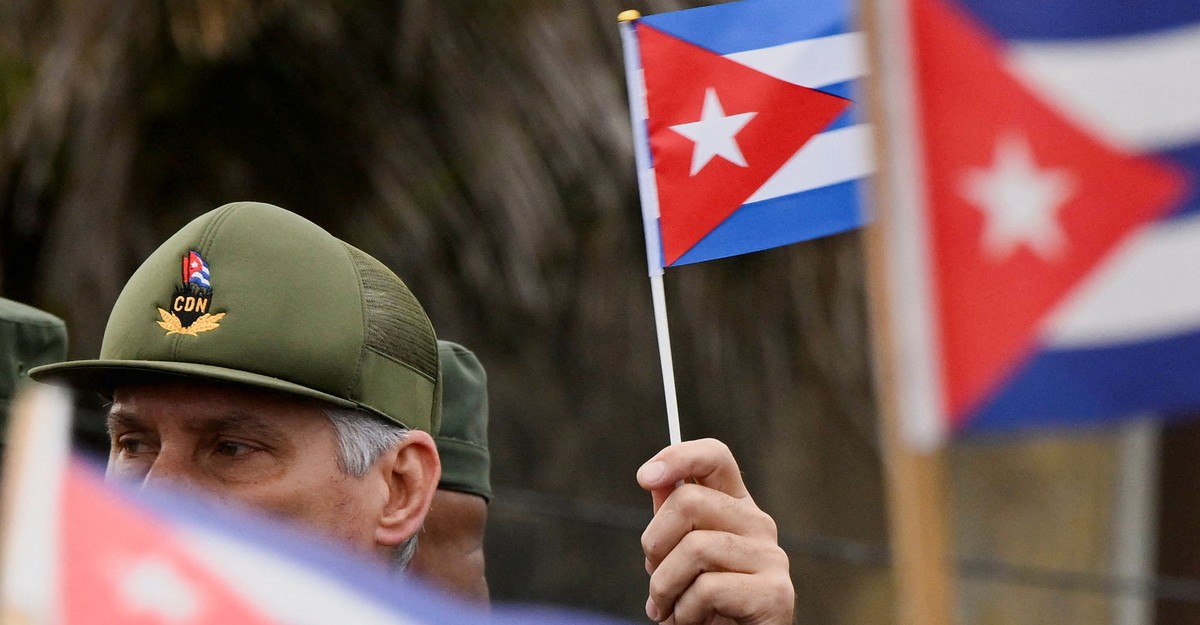
"The president is feeling like, 'I'm on a roll,' like, 'This is working,' one administration official told me. Trump has been open about what he would like to see in Cuba, floating the possibility while speaking with reporters at the White House on Friday of a 'friendly takeover' of the island of 11 million people. He said that Secretary of State Marco Rubio is in discussions with Cuban leaders at a 'very high level' to potentially 'make a deal.'"
"Rubio also is in contact through unofficial channels with Raúl Guillermo Rodriguez Castro, the grandson of former President Raúl Castro, Fidel's brother and successor, according to Axios. Trump has repeatedly emphasized Cuba's dire economic state, telling reporters last month that 'there's no oil, there's no money, there's no anything.' He has also argued that the post-Castro Cuban regime is so fundamentally weak that its own rot would inevitably do the work of an invading army."
"A Cuba in turmoil could cause an influx of refugees to the U.S. at a time when the administration is trying to reverse immigration flows. A military campaign might set the stage for a revolt, but there is little organized opposition in the country after almost seven decades of repressive rule. That could make a negotiated settlement that leaves the regime in place but puts America in charge."
The Trump administration is pursuing an ambitious foreign policy agenda targeting three authoritarian regimes: Iran, Venezuela, and Cuba. Following recent military strikes on Iran and the arrest of Venezuela's president in New York, Trump is now focusing on Cuba, publicly discussing a potential "friendly takeover" of the island nation. Secretary of State Marco Rubio is conducting high-level negotiations with Cuban leaders and maintaining unofficial contact with Raúl Castro's grandson. Trump emphasizes Cuba's economic weakness and the regime's fundamental instability. However, this strategy carries significant risks, including potential refugee crises that could complicate the administration's immigration policies and the challenge of establishing control over a country with minimal organized opposition after decades of authoritarian rule.
#regime-change-strategy #cuba-policy #trump-administration-foreign-policy #diplomatic-negotiations #geopolitical-risk
Read at The Atlantic
Unable to calculate read time
Collection
[
|
...
]