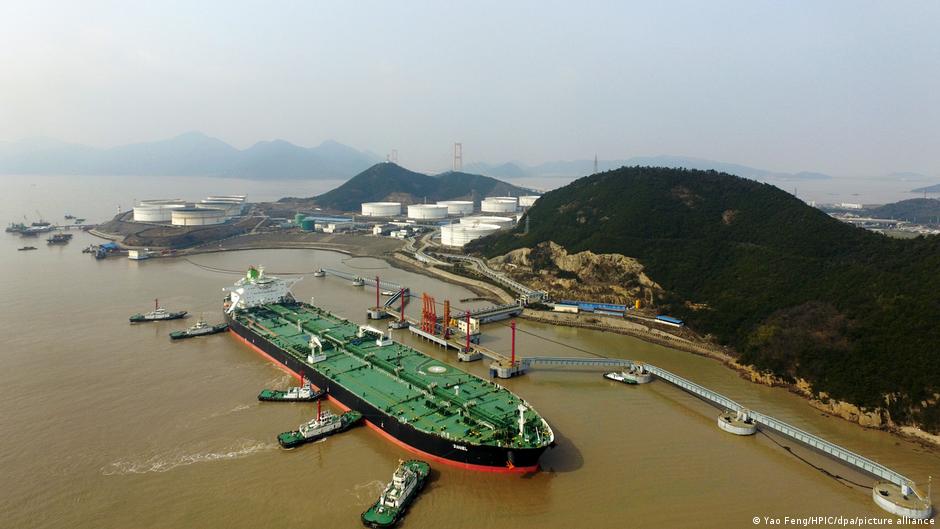
"Around 70 percent of Iran's non-oil trade passes through ports that depend on access via the Strait of Hormuz. Blockading the strait long-term would hurt Iran itself. It doesn't feel rational for Iran to close the street of Hormuz, because they have the imports of crucial goods like crucial food for example, but also the majority of their exports go to China and India, so that would turn against the country."
"Some 20% of global crude oil consumed around the world is shipped via the sea passage, according to the US energy authority EIA. Over 80% of these deliveries go to Asia, above all China, India and Japan. A closure of the Strait of Hormuz would not only choke off oil shipments but also aviation fuel and liquefied natural gas deliveries."
"A blockade would not only interrupt oil and gas shipments from Gulf states to the West, but also Iranian exports destined for China and India, which would exacerbate Iran's economic crisis. Iran has been subjected to Western sanctions, including ones targeting its economy."
The Strait of Hormuz handles approximately 20% of global crude oil consumption, with over 80% destined for Asia. A blockade would disrupt not only oil shipments but also aviation fuel and liquefied natural gas deliveries. Iran's threats have temporarily halted maritime traffic, but experts assess a long-term blockade as economically irrational for Iran. Seventy percent of Iran's non-oil trade depends on Strait access, and the majority of Iranian exports go to China and India. Oil prices have risen significantly since recent US-Israeli attacks, with potential to reach $100 per barrel if maritime traffic becomes too dangerous. While major Western nations maintain strategic reserves for temporary interruptions, a prolonged closure would severely damage Iran's already crisis-stricken economy.
#strait-of-hormuz #iran-sanctions-and-blockade #global-oil-trade #maritime-security #economic-consequences
Read at www.dw.com
Unable to calculate read time
Collection
[
|
...
]