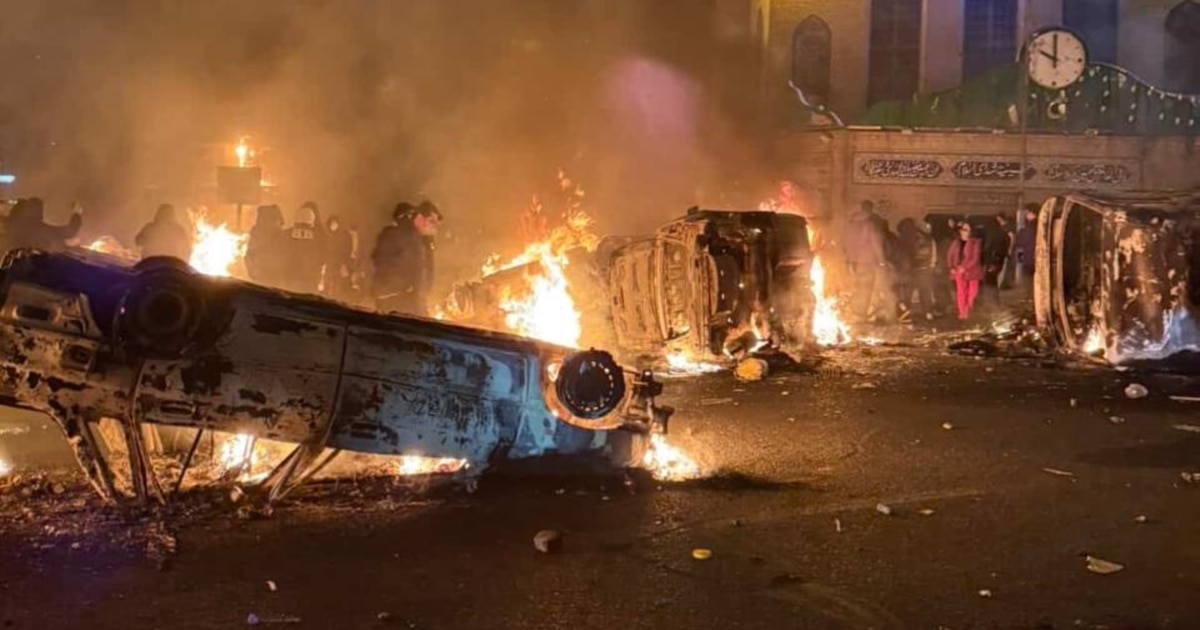
"Iran is in big trouble. It looks to me that the people are taking over certain cities that nobody thought were really possible just a few weeks ago. We're watching the situation very carefully. I've made the statement very strongly that if they start killing people like they have in the past, we will get involved. We will be hitting them very hard where it hurts. That does not mean boots on the ground, but it does mean hitting them very, very hard where it hurts."
"Authorities first throttled nationwide Internet speeds before enforcing a near-total blackout at 10:15 p.m. local time on January 8, severing phone lines too. With the blackout now lasting more than 40 hours there is no precise information about the number of people killed, injured, or detained across the country with widespread fears that the cut is being used to hide state violence against protesters."
Iran entered a 14th night of protests after demonstrations began at Tehran's Grand Bazaar on December 28 and rapidly spread to dozens of towns and cities. Authorities intensified crackdowns while Western leaders, including the US president, increased pressure and warned of punitive measures if security forces resumed lethal force. The US Secretary of State posted support for protesters. Authorities throttled internet speeds and then imposed a near-total blackout from 10:15 p.m. on January 8, severing phone lines and obscuring casualty and detention figures. Amnesty International is investigating reports of intensified unlawful lethal force, and media reported hundreds taken to a Tehran hospital.
Read at RadioFreeEurope/RadioLiberty
Unable to calculate read time
Collection
[
|
...
]