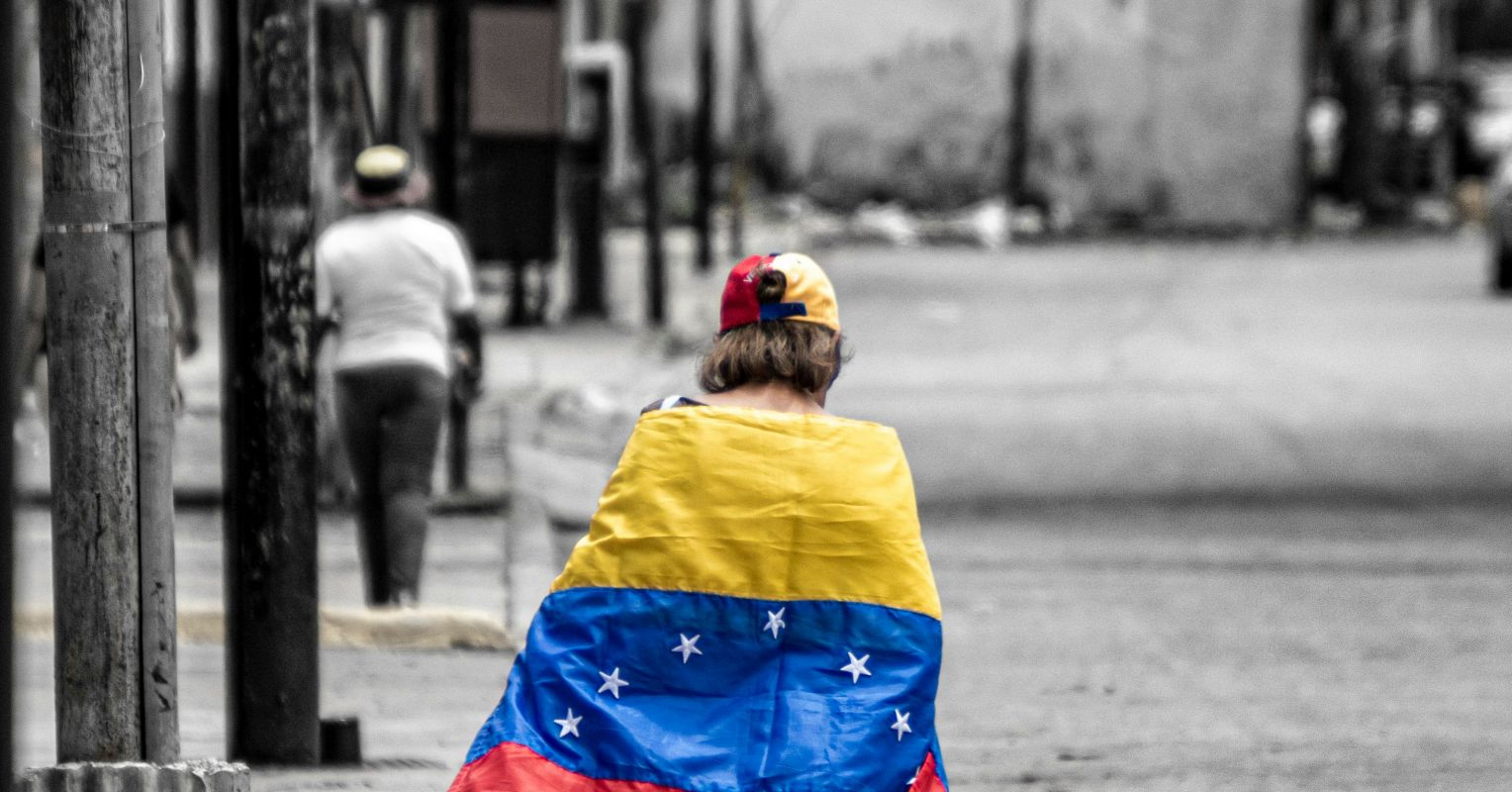
News about Venezuela can trigger intense visceral reactions grounded in family history of refuge after the Holocaust and displacement following Castro's rise. Political stability eroded after Hugo Chávez's ascent in 1999, leading to rapid social collapse, violence, and despair. Crises often tempt people to compress complex events into single-sided narratives in order to calm the nervous system. Seeking certainty narrows perception, hardens judgment, reduces curiosity, and encourages reductive categorization. Some crises contain competing, valid frames that cannot be resolved by choosing one side. The capacity to remain present with unresolved tension influences high-stakes responses.
"A crisis such as this one tempts us to compress the story and to pick a side. To decide, as quickly as we can and with very limited information, whether the whole thing is heroic or catastrophic. And searching for certainty is tempting because it calms the nervous system. The cost, however, is that our perception narrows, our judgment hardens, our curiosity dwindles, and it becomes easier to sort people into reductive categories."
"I was born and raised there, in a country I still carry with pride, even after decades of watching its social fabric erode. Venezuela offered my family refuge after escaping the Holocaust and after the rise of Fidel Castro in Cuba. It felt like a welcoming home until stability began to unravel with Hugo Chávez's rise to power in 1999. In what seemed like the blink of an eye, the country that had once offered safety and opportunities descended into anarchy, chaos, violence, and despair."
Read at Psychology Today
Unable to calculate read time
Collection
[
|
...
]