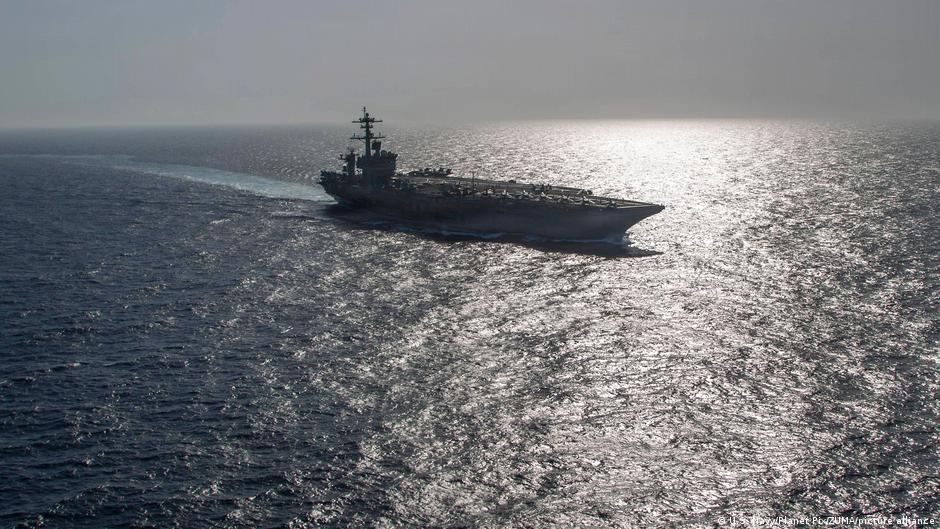
The Strait of Hormuz standoff off Iran’s coast has entered its fourth month with mutual blockades. Iran charges ships up to $2 million for safe passage, while the United States enforces a naval embargo that turns back vessels carrying Iranian oil exports. The competing measures have not achieved decisive outcomes, as some Iranian ships still pass and some Asian shipping firms pay tolls despite violating international maritime law. Negotiations between the US and Iran to reopen the strait have repeatedly stalled, increasing the risk of escalation into a wider regional conflict. Pakistan-led mediation and a proposed one-page memorandum have not led either side to back down. US military threats have faced criticism for potentially weakening US leverage, while US domestic and Gulf ally pressure favors restraint.
"The crisis off Iran's coast is marked by mutual blockades. Tehran has been charging ships up to $2 million (1.73 million) for safe passage through the strait, while the United States enforces a naval embargo, turning back vessels carrying Iranian oil exports. These competing blockades have failed to deliver decisive results. Some Iranian ships continue to slip through, while several Asian shipping firms have agreed to pay tolls, despite such fees violating international maritime law."
"Fragile negotiations between the US and Iran to reopen Hormuz have, meanwhile, stuttered several times, sparking the risk of escalation into a wider regional conflict. Which side will fold first? Yet, despite Pakistan-led mediation efforts and a proposed one-page memorandum aimed at ending hostilities and reopening Hormuz, neither side appears ready to blink first."
"Dania Thafer, executive director of the Washington-based think tank Gulf International Forum (GIF), believes Trump's on-off military threats intended to increase its leverage over Iran may have backfired. "The Iranian response suggests the opposite," Thafer told DW. "They interpret it as the US lacking the will to escalate the war.""
"US President Donald Trump is facing increasing pressure both at home and abroad to avoid further military action, with Gulf allies such as Saudi Arabia, the United Arab Emirates and Qatar urging restraint. Surging oil prices and rising domestic inflation are adding political heat ahead of the US mid-term elections in November. Iran, meanwhile, is losing some $435 million per day in trade, nearly two-thirds of which comes from exports of mainly crude oil."
Read at www.dw.com
Unable to calculate read time
Collection
[
|
...
]