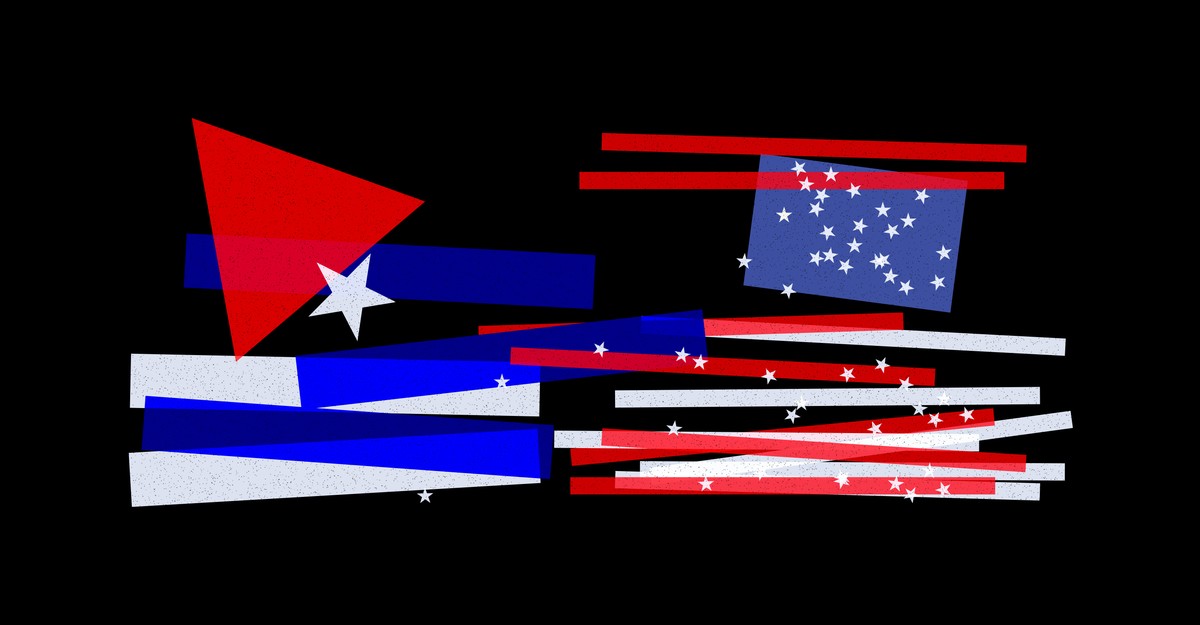
"Cuba's ideological hollowing is decades old. When the Soviet Union collapsed, in 1991, Cuba lost its patron and 35 percent of its GDP. Eastern European Communist Parties were dissolving, and their countries were holding democratic elections."
"Today Washington and Havana are still antagonists, but the ideologies on each side have faded over the years. Cuba's socialist utopianism wore away gradually. The American government's commitment to democracy eroded much more quickly, just in the past few years."
"As they negotiate over Cuba's future—with the threat of U.S. military intervention hanging over their talks—a new dynamic has emerged: The two sides appear to be haggling not over ideas but over which side can extract the most financial gain from Cuba."
"Officials who operate like mob bosses don't need to agree on transcendent values to make a bargain. The new reality is tawdry, but it might put a resolution within reach."
The rivalry between America and Cuba has evolved from a fierce ideological conflict to a focus on financial negotiations. Historically, Cuba championed socialist ideals and supported global uprisings, while the U.S. defended democracy. Over time, Cuba's socialist vision diminished, and the U.S. commitment to democracy weakened. Currently, both governments engage in talks primarily aimed at financial gain rather than ideological alignment. This shift suggests a pragmatic approach to resolving tensions, despite the lingering threat of military intervention from the U.S.
Read at The Atlantic
Unable to calculate read time
Collection
[
|
...
]