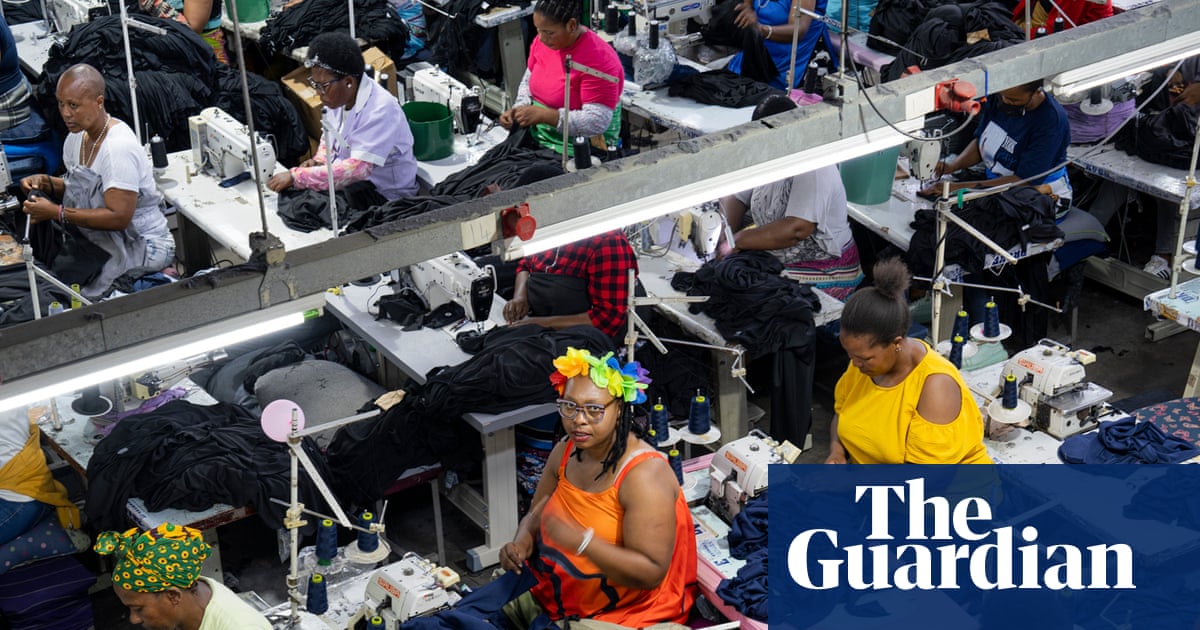
Women in Maseru gather outside garment factories each morning hoping for work, but opportunities have declined sharply since the US imposed global tariffs in April 2025. Moleboheng Matsepe lost a full-time sewing job in 2023, managed short contracts briefly, and has been without work since September, now earning as little as 50 maloti a week while supporting five family members. Lesotho's garment industry employed 50,000 at its 2004 peak under Agoa, which allowed tariff-free US access and expired at the end of September. About 36,000 textile workers remain, many producing for US brands, with low wages and high national unemployment.
"Every morning at 7am, women gather outside clothing factories in Maseru, the capital of the southern African mountain kingdom of Lesotho, hoping to be offered work. However, since Donald Trump imposed swingeing global tariffs in April 2025, those opportunities have been fewer and farther between. Moleboheng Matsepe lost her full-time job sewing sports leggings for the California brand Fabletics in 2023. She was initially able to pick up three-month contracts, but has not had any work since September."
"We can't even sleep at night, said the 48-year-old, who supports five family members and now makes as little as 50 maloti (2.23) a week doing occasional laundry jobs. Lesotho's garment industry employed 50,000 people at its peak in 2004, nurtured by the African Growth and Opportunity Act (Agoa), which was passed in 2000 and offered tariff-free access to the US market for thousands of African goods. Agoa, which needs to be renewed by the US Congress, expired at the end of September amid the US government shutdown."
"According to the trade ministry, there are about 36,000 textile workers mostly women in the country, which is entirely landlocked by South Africa and has a population of 2.3 million. A third of those workers make clothes for the US, including jeans for Levi's and Gap. A factory of garment workers. The Ever Successful Textiles factory. Wages are as low as 2,582 maloti (115) a month. However, the jobs are still highly prized in a country where unemployment was 30% in 2024, according to official data."
Read at www.theguardian.com
Unable to calculate read time
Collection
[
|
...
]