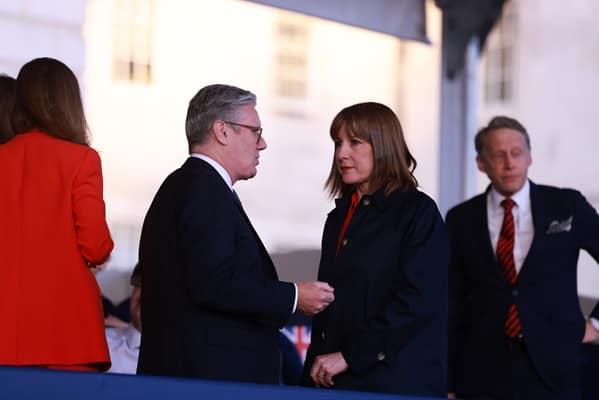
A notable absence of senior UK political representation at Davos 2026 coincides with heightened global economic and security tensions. Tariffs have moved from theoretical threats to active inputs in market models, supply-chain planning, and sovereign risk assessments. Investors increasingly treat tariffs as leverage, and financial markets are already pricing those expectations into currencies, equities, and cross-border capital flows. Military moves, exemplified by Denmark's troop deployments to Greenland, signal a shift from diplomatic posturing to operational readiness and alter risk calculations. The convergence of trade policy and territorial pressure raises immediate strategic and economic challenges for countries dependent on open markets and capital.
"Britain has arrived at Davos in 2026 without a senior political voice on stage at precisely the moment global capital is deciding who still matters. It's striking because the stakes surrounding this year's World Economic Forum are unusually concrete. Davos is taking place amid explicit tariff threats, heightened military posturing among allies, and a visible convergence between trade policy and territorial pressure. Investors, executives, and policymakers are not debating abstract risks, instead they're responding to developments already underway."
"Tariffs, unexpectedly, again, sit at the centre of the Davos agenda. Trade penalties are no longer treated as distant possibilities or rhetorical flourishes. They're incorporated into market models, supply-chain planning, and sovereign risk assessments. President Donald Trump's approach to trade has reinforced that reality, with investors increasingly assuming that tariffs will be applied as leverage rather than restraint. Currency markets, equity valuations, and cross-border investment decisions are already reflecting those assumptions. We've seen this in real-time this week."
Read at London Business News | Londonlovesbusiness.com
Unable to calculate read time
Collection
[
|
...
]