Brent crude futures fell 6% to $97.43 a barrel, the lowest level in two weeks, while stock markets rose on hopes that the US and Iran are moving closer to a peace deal. A framework has been negotiated to end the near three-month US-Israeli war on Iran, but key disagreements remain, including Iran’s blockade of the strait of Hormuz. An Iranian government spokesperson said an agreement is not imminent. The strait’s de facto closure previously pushed energy prices higher after missile strikes on Tehran on 28 February. Even if the strait reopens, analysts expect normal oil flows to take months due to damaged infrastructure in Qatar and elsewhere. Shipping data showed LNG tankers exiting the strait and an Iraqi crude supertanker leaving the Gulf after being stranded for almost three months. Oil prices remain well above pre-war levels near $70 per barrel.
"Brent crude futures, the global oil benchmark, were down 6% to $97.43 a barrel, the lowest level in two weeks, with hopes that an agreement to end the near three-month US-Israeli war on Iran can be struck. However, while a framework has been negotiated, the US and Iran remain at odds over key issues such as Iran's blockade of the strait of Hormuz. An Iranian government spokesperson cautioned that an agreement was not imminent."
"The strait's de facto closure sent energy prices soaring after the US and Israel first launched missile strikes on Tehran on 28 February. Warren Patterson, the head of commodities strategy at ING, told Reuters: We've been at this stage before, only for talks to break down. Therefore, the market will likely be more cautious about overreacting. Even if the strait reopens, analysts say a return to normal oil flows will take months, while damaged energy infrastructure in Qatar and elsewhere is repaired."
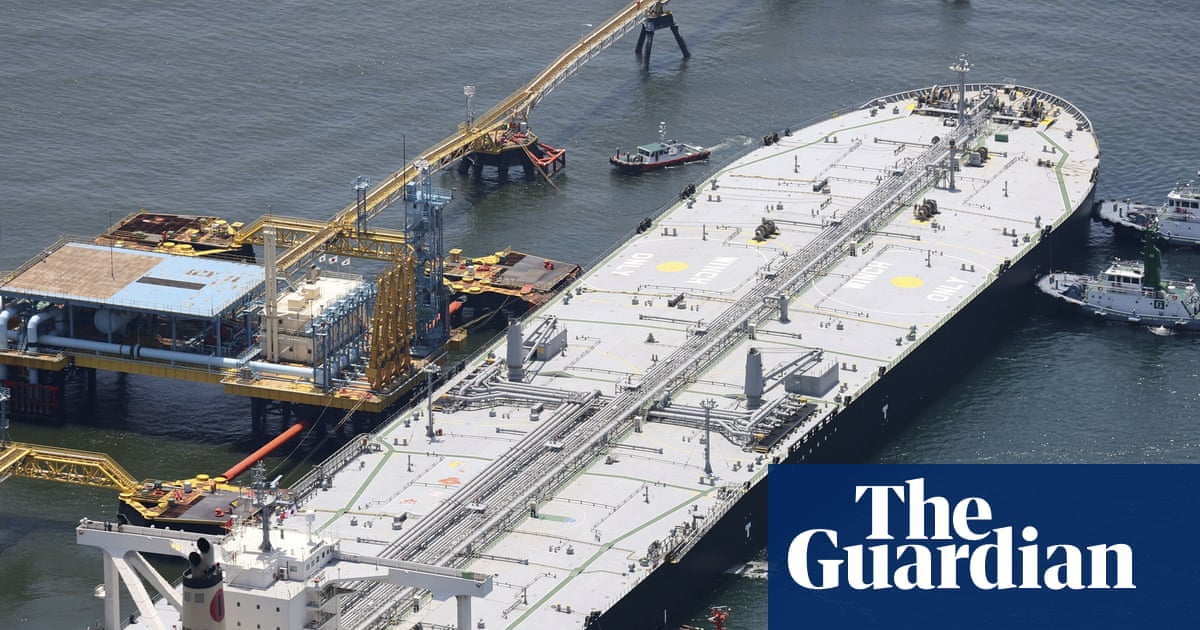
"Two tankers carrying liquefied natural gas were exiting the strait on Monday, heading to Pakistan and China, while a supertanker with Iraqi crude left the Gulf bound for China on Saturday after being stranded for almost three months, Reuters reported, citing shipping data. The UBS analyst Giovanni Staunovo said: We continue to believe that the key factors for the oil market to watch should be the physical oil flows, and so far flows through the strait remain restricted."
"Despite the fall on Monday, oil prices remain much higher than in the run-up to the Iran war, when a barrel of Brent crude was trading at about $70. Barclays stuck to its average Brent crude oil price forecast of $100 this year, but said there were risks it could be higher. Japan's Nikkei rose nearly 3% and the pan-European Stoxx 600 index was up 1%. Several markets were closed on Monday for a public holiday, including in the US and the UK."
Read at www.theguardian.com
Unable to calculate read time
Collection
[
|
...
]