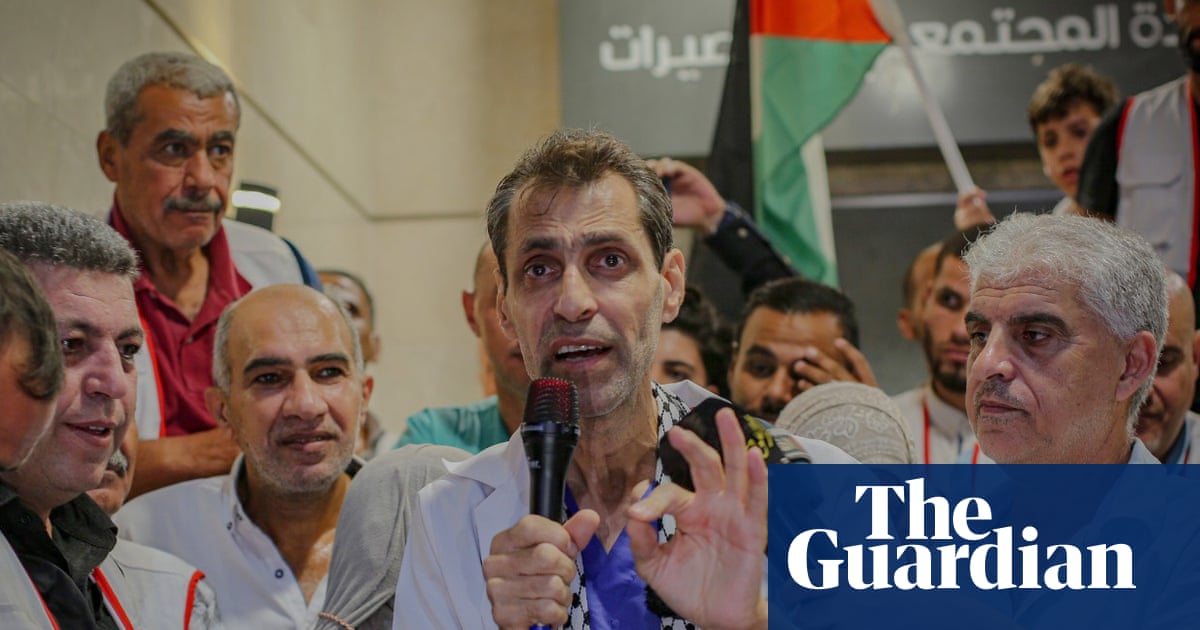
"The only thing that kept Dr Ahmed Muhanna going during his 22 months inside Israeli prisons and detention centres was dreaming of his return to his family and to Gaza. When he was finally released after 665 days as a prisoner, he arrived home to find every place he had returned to in his memories had been obliterated. While in prison, he and the other inmates were completely cut off from the outside world, he says."
"When he was released he was driven over the border and through Gaza to his hospital, the al-Awda. The scale of the destruction he saw made my skin crawl my chest tightened and my tears began to flow. When Muhanna, one of Gaza's most senior anaesthesiologists and emergency care consultants, was detained by Israeli forces in December 2023, the al-Awda hospital was under siege."
"I feel such pain and sorrow at what we are facing, Muhanna says. Despite the ceasefire, 77% of the population, including 100,000 children, still face high levels of acute food insecurity, according to the World Health Organization (WHO). Muhanna and his staff continue to treat severely malnourished children who develop complex medical issues as a result. In December 2025, al-Awda Hospital suspended medical services after the closure of border crossings meant there was too little fuel to run its electric generators."
Dr Ahmed Muhanna endured 22 months in Israeli prisons before returning to find his home and hospital sites obliterated. Al-Awda hospital returned with severe losses: 75 colleagues killed and critical shortages of staff, equipment and medicine. Since 7 October 2023, 1,200 Palestinian healthcare workers have been killed and 384 detained, according to Healthcare Workers Watch. Fuel shortages from closed border crossings forced al-Awda to suspend services in December 2025. Seventy-seven percent of the population, including 100,000 children, faces acute food insecurity, and hospitals are treating severely malnourished children with complex medical issues.
Read at www.theguardian.com
Unable to calculate read time
Collection
[
|
...
]