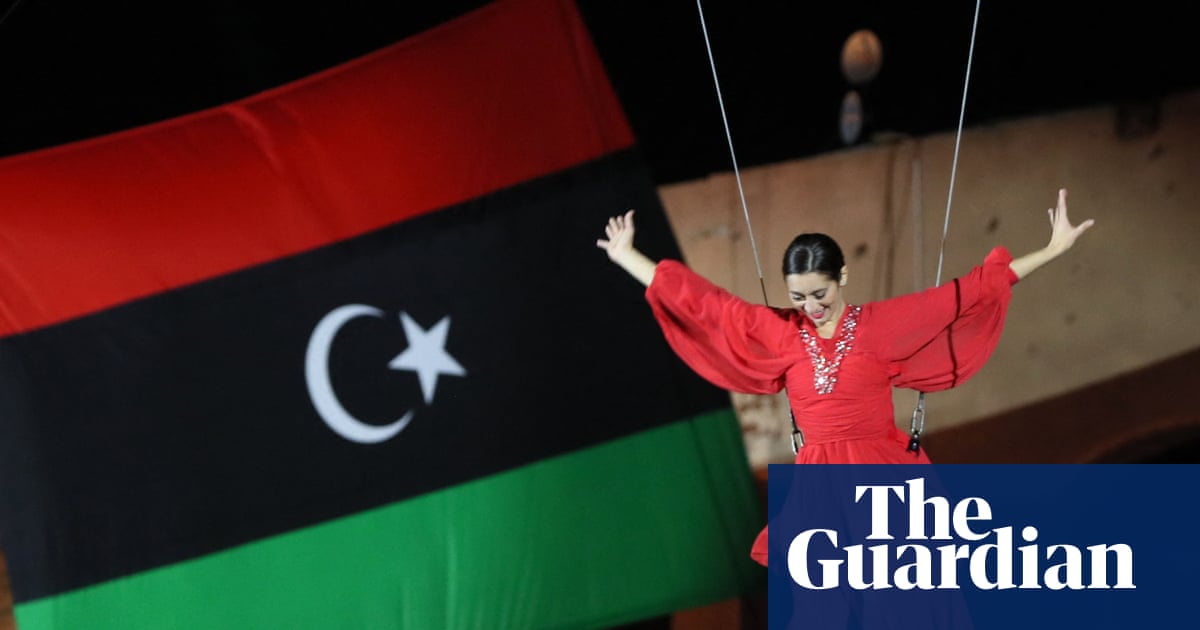
"It was a night at the museum like no other. As the staccato sound of firecrackers and explosions rang out across Martyr's Square in the heart of Tripoli, for once it was not Libya's militias battling it out for a larger stake in the country's oil economy, but a huge firework display celebrating the reopening of one of the finest museums in the Mediterranean."
"Its ceremonial reopening came at the climax of a lavish show compressing Libya's rich history and attended by diplomats and Arab celebrities, with a full-size Italian orchestra, acrobats, dancers, arches of fire and lights projected on to the fort. It did not lack for circus drama or cost, peaking with a billowing Ottoman sailing ship arriving high above the port on wires to be greeted by an angelic-appearing Libyan woman."
"Inside, Libya's history revealed itself a record of a vast country shaped by successive occupations from Greek to Roman, Ottoman and Italian. On its four floors could be found cave paintings worthy of Lascaux; 5,000-year-old mummies from the ancient settlements of Uan Muhuggiag in Libya's deep south; tablets in the Punic alphabet; and countless treasures from the still largely unvisited Roman coastal cities of Leptis Magna and Sabratha, including spell-binding mosaics,"
The National Museum of Libya in Tripoli reopened after nearly 14 years of closure following the civil war that followed Muammar Gaddafi's downfall. A lavish reopening ceremony in Martyr's Square featured fireworks, a full-size Italian orchestra, acrobats, dancers, arches of fire, projected lights and a staged Ottoman ship, attended by diplomats and Arab celebrities. Prime Minister Abdul Hamid Dbeibah ceremonially hammered the museum doors open. The museum houses Africa's greatest collection of classical antiquities across four floors, including cave paintings, 5,000-year-old mummies, Punic tablets and treasures from Leptis Magna and Sabratha.
Read at www.theguardian.com
Unable to calculate read time
Collection
[
|
...
]