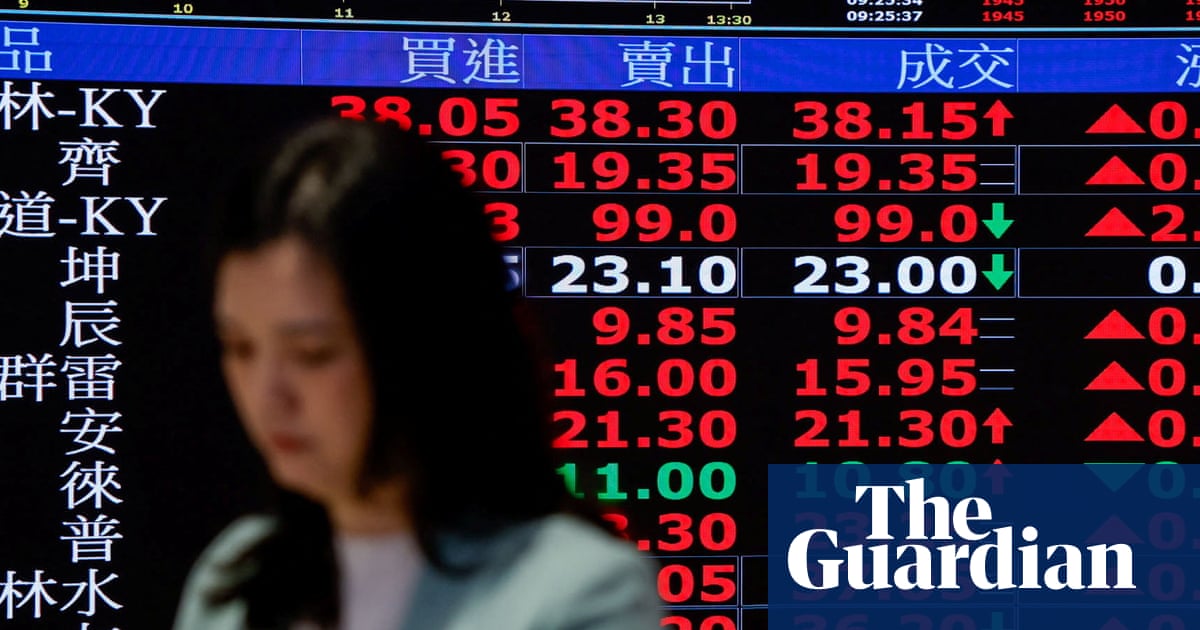
Following U.S. and Israeli missile strikes on Iran, global markets face potential protracted conflict risks. The closure of the Strait of Hormuz threatens a fifth of world oil and gas supplies, pushing benchmark oil prices above $85 per barrel. Asian markets heavily dependent on imported energy suffered severe losses, with South Korea's stock market collapsing 13% in its worst day on record. The Australian sharemarket declined 3.8%, while Wall Street losses remained under 1%. Market analysts express concern about complacency, noting investors assume Trump administration policy reversals based on recent patterns. Uncertainty about conflict duration and resolution creates market hesitation, as the administration's strategic objectives remain unclear.
"The closure of the strait of Hormuz, through which travels a fifth of the world's oil and gas supplies. Since the start of the hostilities, the global benchmark oil price has jumped by 17% to more than US$85 a barrel, triggering shock waves through financial markets."
"Asian markets, many based in countries heavily reliant on imported energy, were battered. In South Korea, the stock market collapsed by 13% in a single session to record its worst day in history. But on Wall Street, the S&P 500 index had lost less than 1%."
"Markets are assuming there will be some sort of backdown and this won't be a long, drawn-out war. The essential challenge for investors is that it's not clear why Trump decided to launch the war, and therefore what it will take to end it."
#middle-east-conflict #oil-market-disruption #global-market-volatility #geopolitical-risk #energy-supply-crisis
Read at www.theguardian.com
Unable to calculate read time
Collection
[
|
...
]