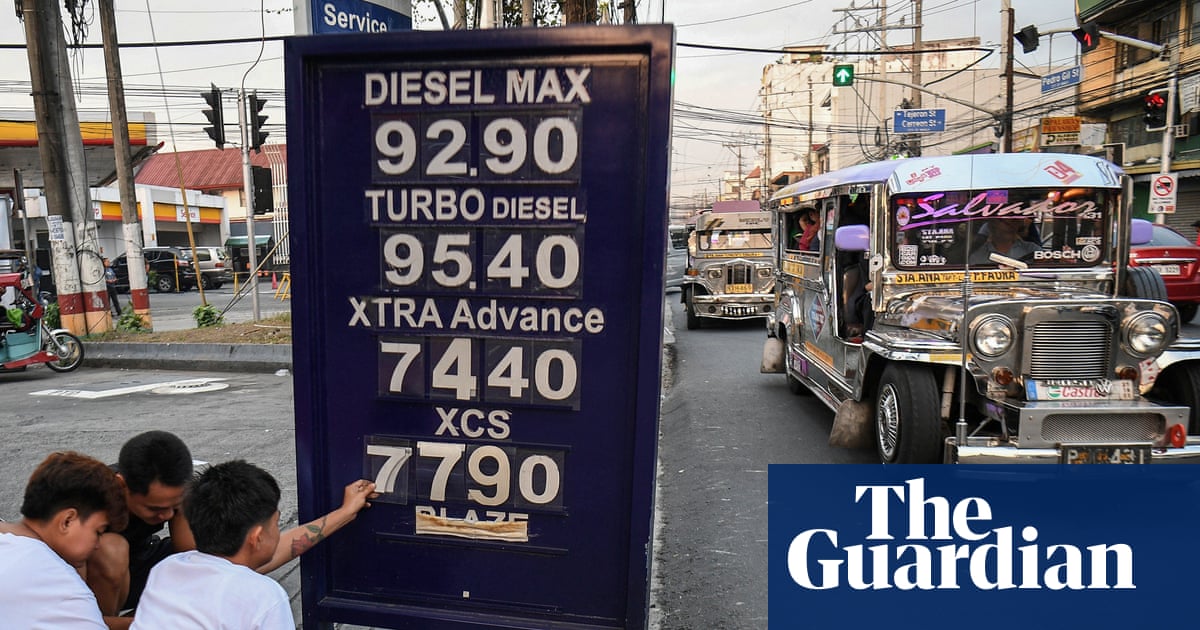
Southeast Asian nations face acute energy crises due to Middle East conflict disrupting global oil supplies, with the International Energy Agency calling it the largest supply disruption in oil market history. The region, heavily dependent on imported energy through the Strait of Hormuz, implements diverse conservation strategies: Thailand's news anchors remove jackets on air, Philippines shifts government workers to four-day weeks and provides cash handouts to transport drivers, and Vietnam encourages remote work. The Philippines, relying on the Gulf for 90% of oil needs, mandates 10-20% electricity and fuel cuts across government agencies. Price increases devastate workers like jeepney drivers earning half their previous income, creating food insecurity. The Philippine Senate grants emergency powers to suspend excise taxes on oil, though officials warn the crisis duration remains uncertain.
"Asia, which relies heavily on imported energy, much of which passes through the strait of Hormuz, is acutely affected by the crisis. In the Philippines, which depends on the Gulf for 90% of its oil requirements, the government is introducing cash handouts for drivers of public transport vehicles, and has told government agencies to cut electricity and fuel use by between 10 and 20%."
"Before, I spent 700 pesos [8.80] on diesel and took home around 1,000 pesos per day. Now I only earn 400 pesos. It's not even enough for food, said Carrascal, who has plied the roads of Mandaluyong City, in the capital region, for 35 years. How far can your 400 go? Rice alone is 65 per kg."
"On Tuesday, the Philippine senate granted the president, Ferdinand Marcos Jr, emergency powers to temporarily suspend or reduce excise taxes on oil, but has warned it is unclear how long the crisis will last. We are victims of a war that is not of our choosing, Marcos said earlier this month."
Read at www.theguardian.com
Unable to calculate read time
Collection
[
|
...
]