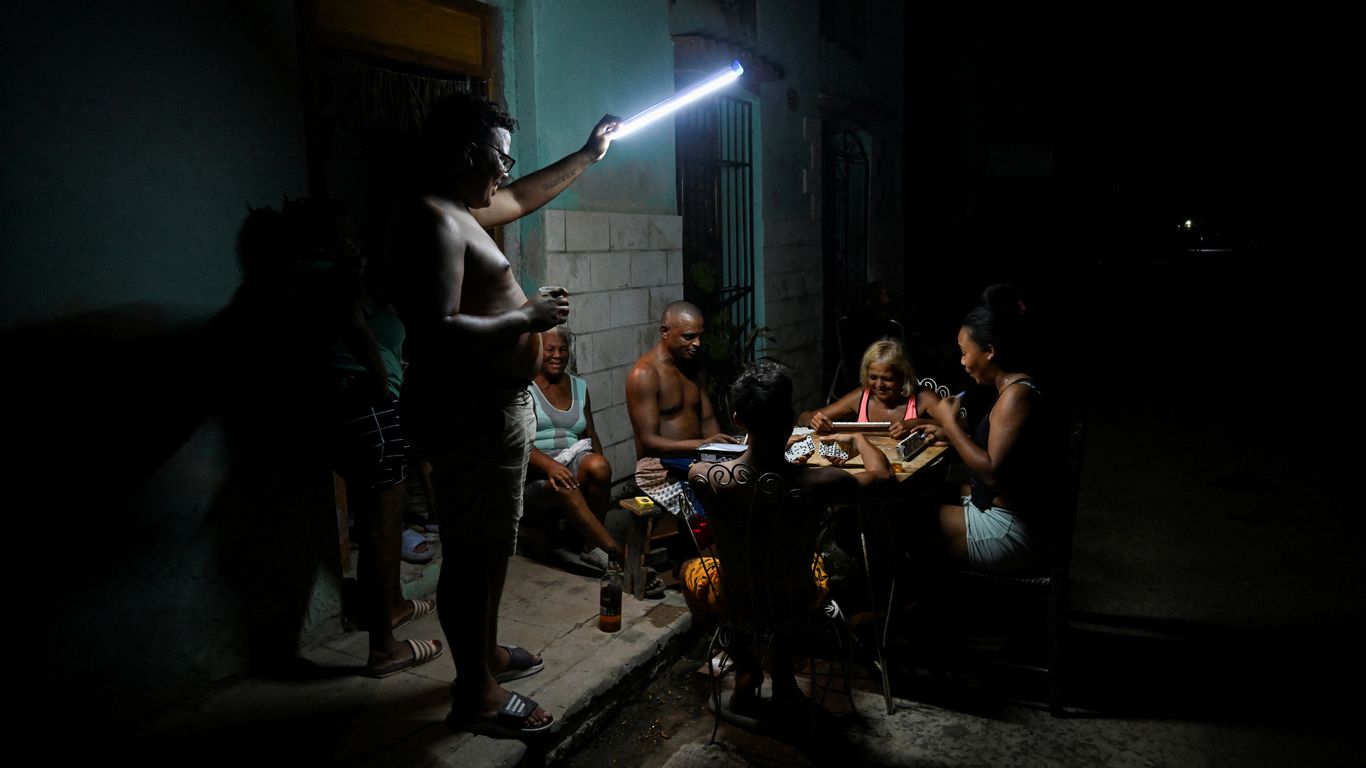
Fuel shortages have gripped Cuba after the U.S. captured former Venezuelan President Nicolás Maduro, removing a key oil provider for nearly 11 million residents. Refrigerators have struggled to run, food stockpiles have depleted and rotted, and about 1 million people lack reliable water access because delivery trucks lack diesel. The shortages have delayed more than 96,000 surgeries and officials have paused the childhood immunization program for newborns. U.S. efforts to topple the Cuban government are described as applying escalating pressure while monitoring responses. Progress is slowed because no successors have been identified in the Cuban government. As conditions worsen without visible improvement, the president may feel compelled to take more drastic action, while diplomacy continues and suffering persists.
"Fuel shortages have gripped the country since the U.S. captured former Venezuelan President Nicolás Maduro in January, stripping Cuba of its key oil provider for the island's nearly 11 million residents. Residents have struggled to keep refrigerators running, leaving depleted food stockpiles to rot, and about 1 million Cubans lack reliable access to water because delivery trucks don't have enough diesel, according to the UN."
"The crisis has delayed over 96,000 surgeries, and officials have paused the childhood immunization program for newborns. Inside the room: An advisor close to Trump tells Axios' Marc Caputo that the president's approach to toppling the Cuban government is "classic Trump.""
""Push your enemy off balance. It's pressure, watch the response, apply more pressure, watch the response, apply more pressure." What is slowing the process is that, unlike the Maduro operation, Trump hasn't picked any successors in the Cuban government. The island's transition away from one-person rule 30 years ago means removing Castro wouldn't necessarily collapse the regime."
"Nonetheless, another official says that as sweltering summer temperatures gradually increase suffering on the island, the president may feel compelled to do something more drastic to alleviate the humanitarian crisis. What they're saying: "[The conditions worsen] on a day-to-day basis, without any visible possibility of improvement," Sebastian Arcos, Interim Director for the Institute for Cuban Studies, tells Axios. "It's a terrible, terrible situation that, honestly, I don't think it can take another six months. It cannot take another three months.""
Read at Axios
Unable to calculate read time
Collection
[
|
...
]