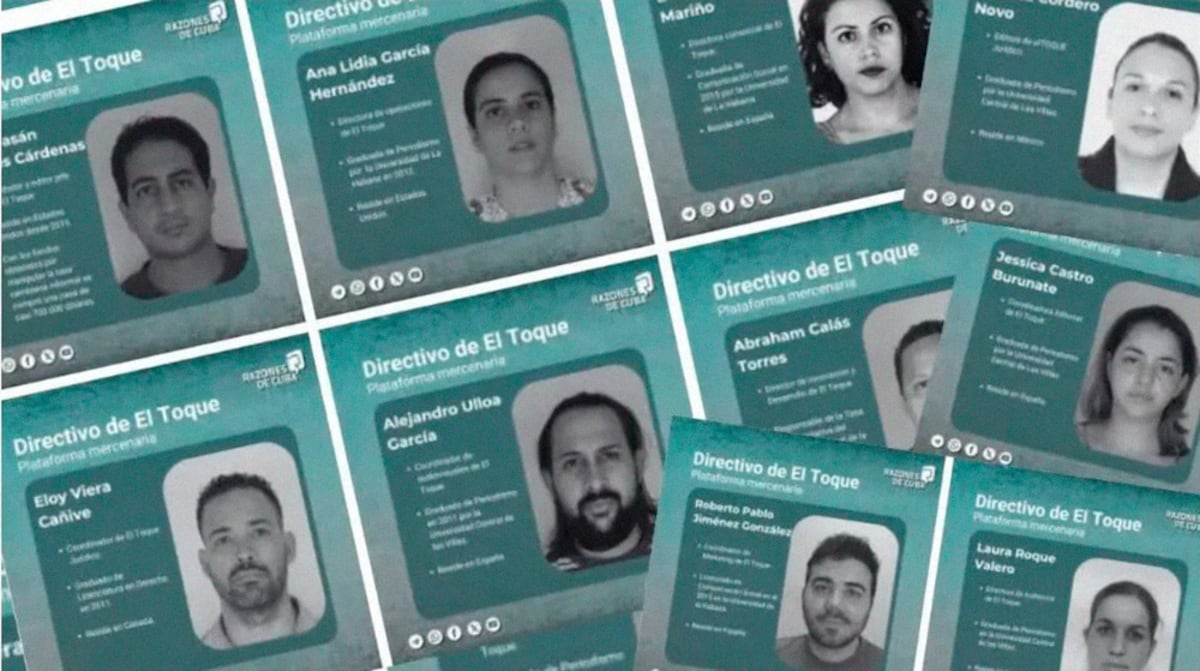
"I never thought it would become an object of both desire and hatred for the entire Cuban propaganda apparatus, Nieves told EL PAIS. Nor that they would disrespect the intelligence of the Cuban people so much by suggesting that a website is capable of influencing the entire economy of a country. If that were the case, we would be looking at the weakest government that has ever existed."
"It was at that time, during the economic restructuring imposed by the so-called Tarea Ordenamiento that sought monetary unification in Cuba, that people began to trade online with the CUP (Cuban Peso) and the MLC (Freely Convertible Currency), without anything or anyone regulating the purchase and sale."
"The problem in Cuba is that there is a lot of demand and little supply: that is, there are very few dollars because there is no tourism, Cuban travel has declined, aid in cash is less common, and instead comes in the form of food or medicine. So, the price of the currency is high and tends to rise."
elTOQUE created the Representative Rate of the Informal Market (TRMI) to publish black-market exchange rates between the CUP, MLC, dollar and euro after Tarea Ordenamiento triggered online currency trading without regulation. The TRMI became widely used as Cubans sought a daily benchmark amid 10% inflation and multiple currencies. The TRMI currently places the dollar at 450 CUP, up from 265 CUP in January. Dollar scarcity—driven by collapsed tourism, reduced travel, and fewer cash remittances—has pushed rates higher. The government views the service as adversarial, and elTOQUE rejects claims that a website can determine the national economy.
Read at english.elpais.com
Unable to calculate read time
Collection
[
|
...
]