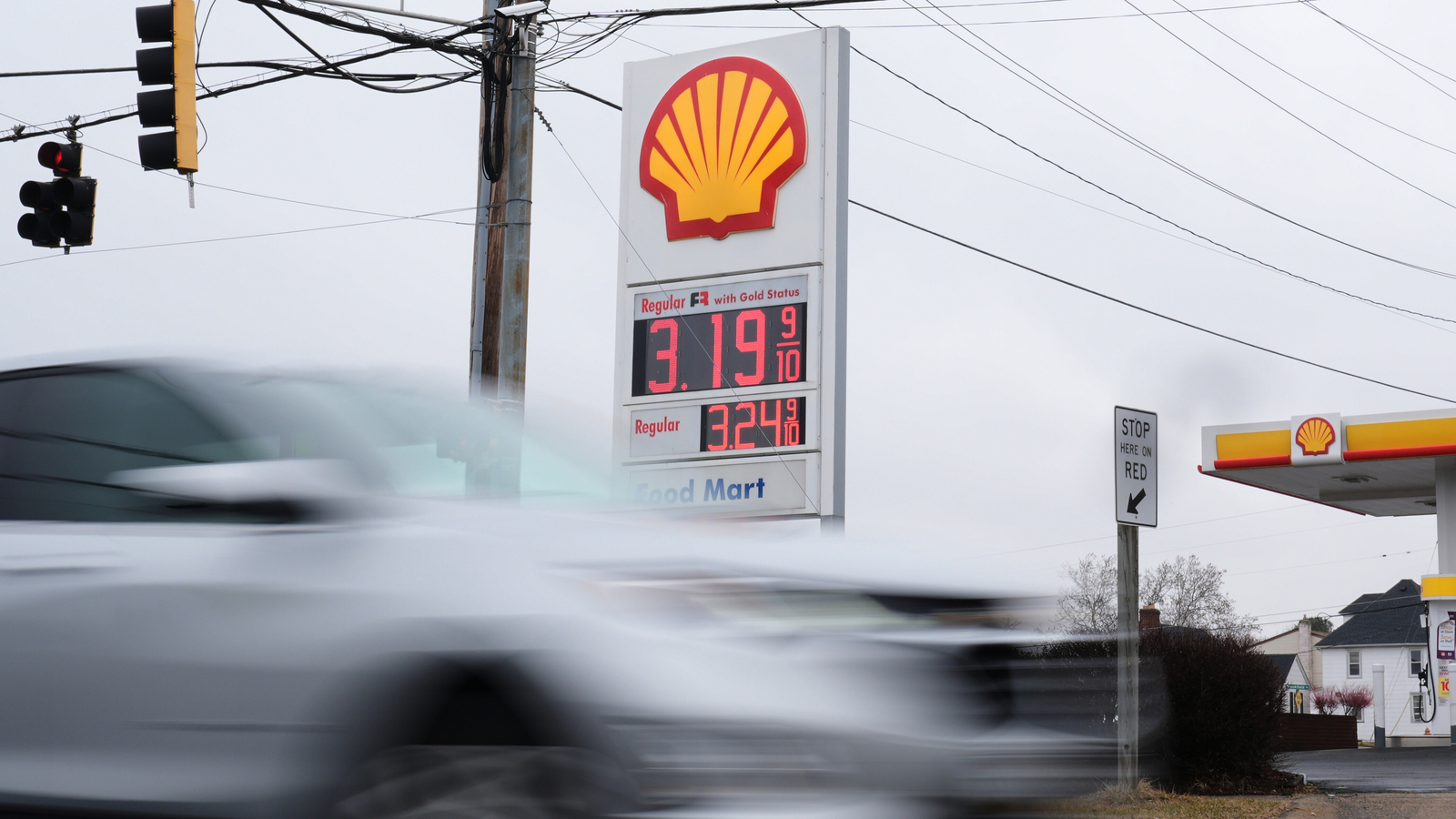
Oil prices surged past $100 per barrel following escalating conflict in the Middle East. Brent crude reached $107.97, up 16.5% from Friday, while West Texas Intermediate climbed to $106.22, up 16.9%. The war's second week disrupted critical oil infrastructure and shipping routes. Approximately 20% of global oil—roughly 15 million barrels daily—typically flows through the Strait of Hormuz, now threatened by Iranian missile and drone attacks. Iraq, Kuwait, and the UAE reduced production as storage tanks filled due to export constraints. Multiple countries attacked oil and gas facilities, intensifying supply concerns. These price levels represent the highest since mid-2022, raising inflation and consumer spending concerns.
"Roughly 15 million barrels of crude oil - about 20% of the world's oil - typically are shipped every day through the Strait of Hormuz, according to independent research firm Rystad Energy. The threat of Iranian missile and drone attacks has all but stopped tankers from traveling through the strait, which is bordered in the north by Iran, carry oil and gas from Saudi Arabia, Kuwait, Iraq, Qatar, Bahrain, the United Arab Emirates and Iran."
"Iraq, Kuwait and the UAE have cut their oil production as storage tanks fill due to the reduced ability to export crude. Iran, Israel and the United States also have attacked oil and gas facilities since the war started, exacerbating supply concerns."
"The global surge in oil prices since Israel and the U.S. attacked Iran on March 1 has rattled financial markets, sparking worries that higher energy costs will fuel inflation and lead to less spending by U.S. consumers, the main engine of the economy."
Read at ABC7 Chicago
Unable to calculate read time
Collection
[
|
...
]