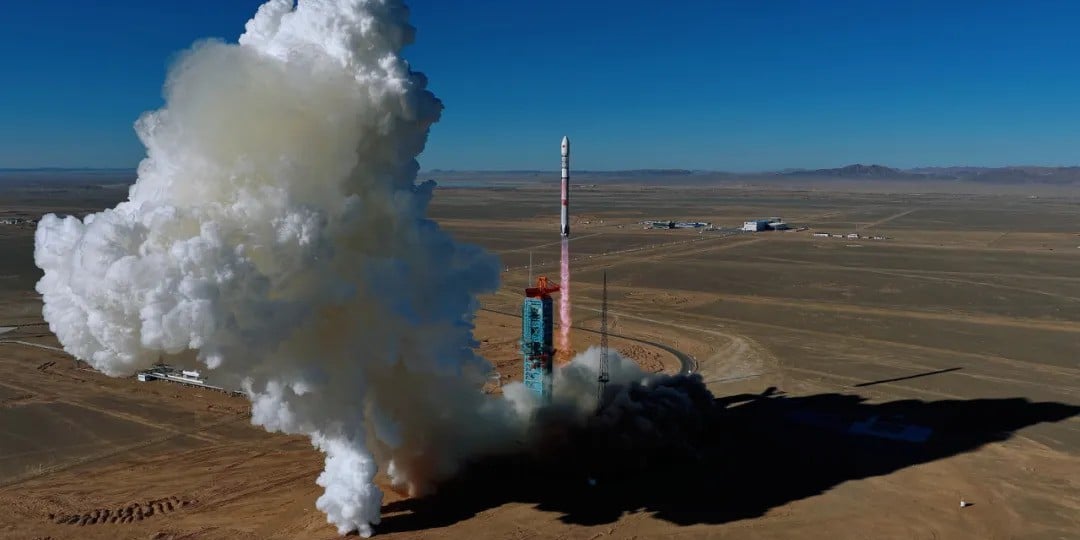
"The Zhuque-3 Y1 lifted off from the Dongfeng Commercial Aerospace Innovation Test Zone last Wednesday and performed as expected by placing its second stage in the desired orbit. But the planned soft landing of its first stage went awry, causing an explosion."
"LandSpace nonetheless celebrated the mission for successfully demonstrating several new technologies, among them a nine-engine parallel liquid oxygen-methane propulsion system, new aerodynamic and flight control tech, and advanced welding techniques that reduced manufacturing costs by 80 percent. "Breakthroughs were made in online trajectory optimization, attitude stabilization, and high-precision control technologies under complex constraints, wide-range state changes, and highly uncertain environments," the company said."
"The company also pointed out that its rocket used a "high-bandwidth, high-reliability real-time communication platform based on high-speed Powerlink real-time Ethernet" that allowed comms "exceeding 100Mbps, a hundredfold improvement over the traditional 1553B rocket." "A high-performance return control computer was developed using an advanced, highly reliable computing platform from automotive electronics, achieving more than 10 times the computing power of traditional launch vehicles, creating a new type of productivity that integrates rocket avionics systems with high-end advanced manufacturing," the company enthused."
LandSpace launched the Zhuque-3 Y1 from the Dongfeng Commercial Aerospace Innovation Test Zone and placed its second stage into the intended orbit. The first stage failed to perform a soft landing and exploded during descent. The mission validated several new technologies, including a nine-engine parallel liquid oxygen-methane propulsion system, new aerodynamic and flight control systems, and welding techniques that cut manufacturing costs by 80 percent. The company reported breakthroughs in online trajectory optimization, attitude stabilization, and high-precision control under complex and uncertain conditions. The vehicle used a high-bandwidth Powerlink real-time Ethernet communications platform delivering over 100 Mbps and a high-performance return control computer based on automotive electronics providing more than ten times the computing power of traditional launch vehicles. South Korea announced plans to strengthen security certifications after a large Coupang data breach; Coupang issued an apology.
Read at Theregister
Unable to calculate read time
Collection
[
|
...
]