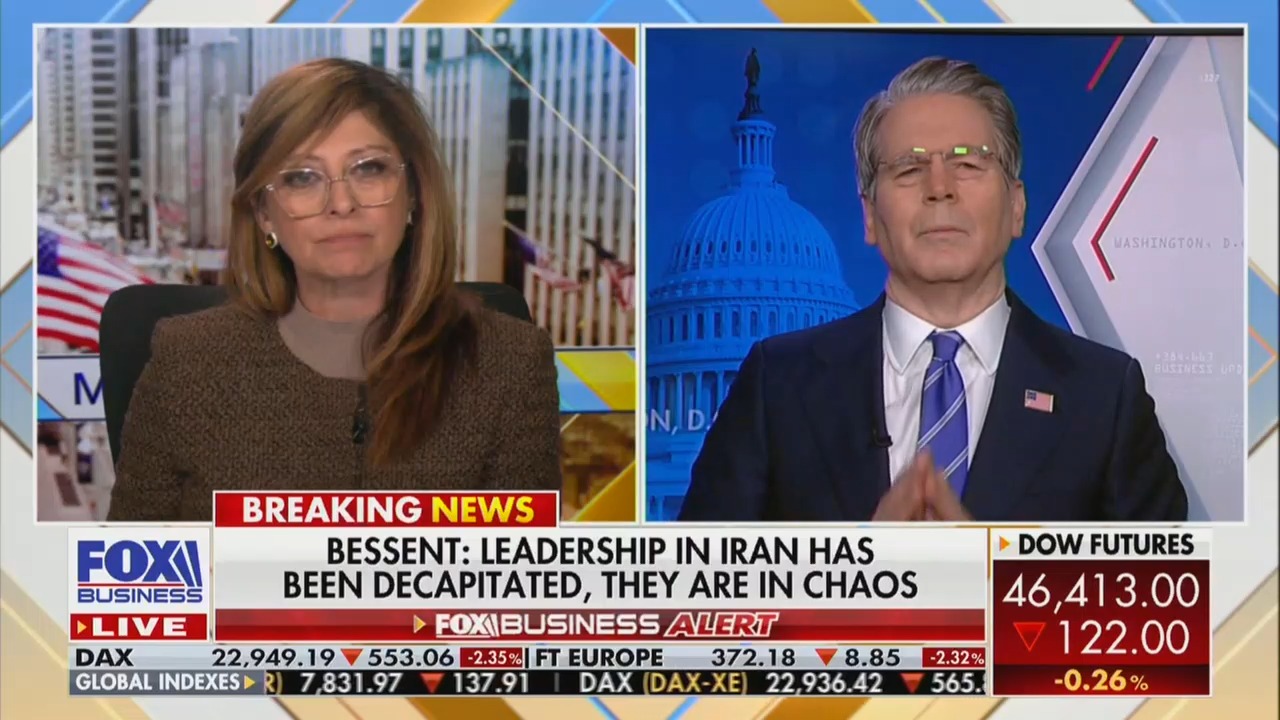
"We are not attacking their energy infrastructure on Kharg Island, which is the nexus—90% of Iranian oil comes out of there. We did a precision strike against all the military targets on that island, and none of the energy assets were targeted. So we have allowed Iranian oil to continue out of the Gulf, where some Indian tankers have moved out and some Chinese tankers that moved out."
"We had a break glass plan across the administration and Treasury. We unsanctioned Russian oil. We knew that there were about 130 million barrels on the water, and we created supply that is beyond the Strait of Hormuz. So we anticipated this. We knew there could be a temporary—and I want to emphasize temporary—chokepoint there, and there was 130 million barrels of floating storage."
"In the coming days, we may unsanction the Iranian oil that's on the water. It's about 140 million barrels. So, depending on how you count it, that's 10 days to two weeks of supply that the Iranians had been pushing out. That would have all gone to China. In essence, we will be using the Iranian barrels against the Iranians to keep the price down."
Treasury Secretary Scott Bessent explained the administration's coordinated approach to managing energy markets during military operations against Iran. The strategy involves precision strikes on military targets while deliberately avoiding Iranian oil infrastructure, particularly the Kharg Island facility responsible for 90% of Iranian oil exports. To prevent energy price spikes, the administration unsanctioned Russian oil and plans to release approximately 140 million barrels of Iranian oil held in floating storage. This two-pronged approach—military escalation combined with strategic energy supply management—aims to maintain global oil supply stability while continuing military operations over the coming weeks.
#energy-markets #iran-military-operations #oil-price-stabilization #treasury-policy #sanctions-strategy
Read at www.mediaite.com
Unable to calculate read time
Collection
[
|
...
]