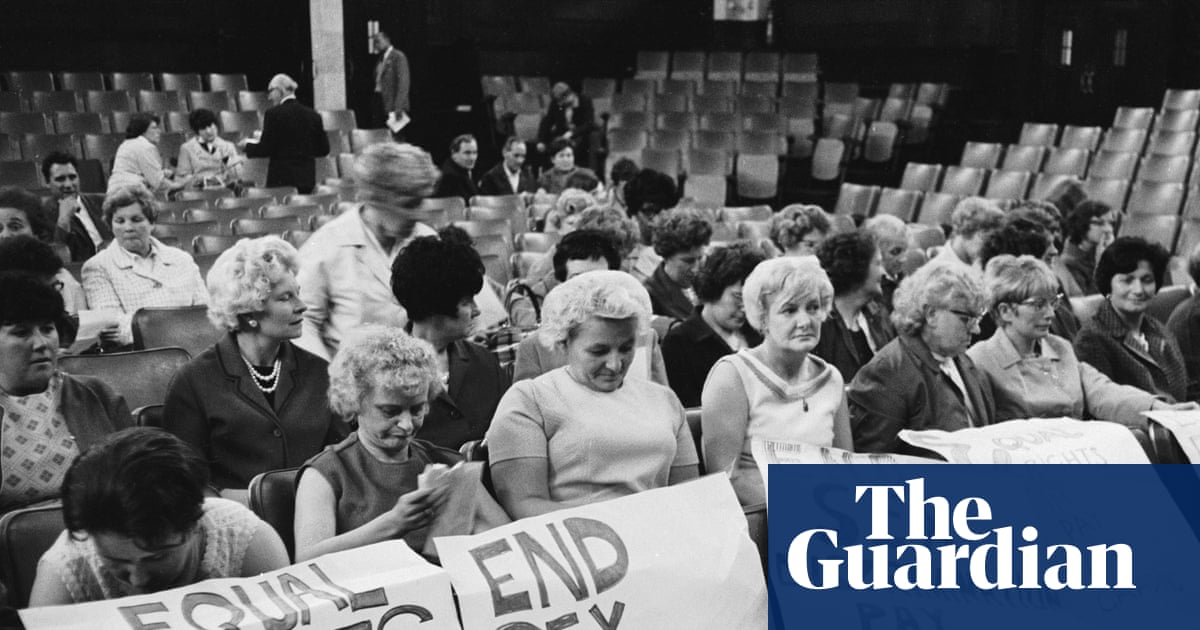
"One of the key groups of women she cites in this campaign were the 187 sewing machinists at Ford's Dagenham Plant who forced the issue with their 1968 strike for equal pay. The sewing machinists did not go on strike primarily for equal pay. They were outraged that the 1967 new grade structure introduced by the Ford Motor Company had evaluated the their work as grade B. The sewing machinists believed their work was at least semi-skilled and should have been graded C."
"Barbara Castle was brought in to negotiate with the sewing machinists, who had brought the Ford production line to a halt. Following her intervention, the machinists agreed to return to work, having been offered an increase in pay which, over two years, would raise their pay from 85% of the male grade B rate to 100%."
"It took until 1984 and another strike by the sewing machinists, who once again brought the Ford Motor Company production lines to a halt, for their grievance to be addressed. They made a claim under the Equal Value (Amendment) Regulations of 1983. A panel under the auspices of the Advisory, Conciliation and Arbitration Service iunanimously evaluated the machinists' job as grade C. Finally, they won recognition of the skill and value of their work."
One hundred eighty-seven sewing machinists at Ford's Dagenham Plant struck in 1968 after a 1967 grade restructure classified their work as unskilled grade B rather than semi-skilled grade C. Negotiations led by Barbara Castle produced a temporary pay increase raising wages from 85% to 100% of the male grade B rate over two years, prompting the machinists to return to work. A further dispute in 1984 led to a claim under the Equal Value (Amendment) Regulations 1983. An Advisory, Conciliation and Arbitration Service panel unanimously evaluated the job as grade C, securing formal recognition of the machinists' skill and value.
Read at www.theguardian.com
Unable to calculate read time
Collection
[
|
...
]