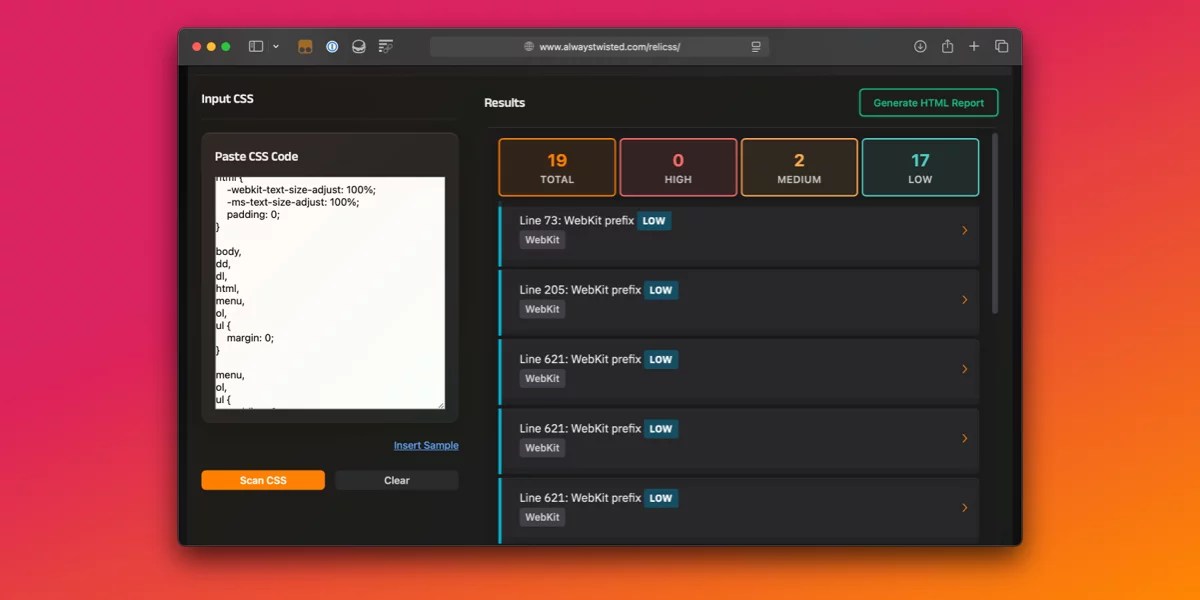
Outdated CSS techniques often linger in codebases as one-off !important rules, checkbox hacks, and vendor-prefixed properties from older toolchains. ReliCSS can scan codebases to identify such relics and assign severity levels for prioritization. High severity items are true fossils—IE6/7 hacks and dangerous techniques that require immediate removal. Medium severity covers fragile hacks for older unsupported browsers (IE8-10) that should be reviewed for current user relevance. Low severity includes vendor prefixes, which are generally safe but better handled by build tools like Autoprefixer. Scans of personal sites and larger sites often show mostly vendor prefix artifacts rather than critical legacy hacks.
"We all have a few skeletons in our CSS closets. There's probably that one-off !important where you can now manage that more effectively with cascade layers. Or maybe a dated Checkbox Hack that :has() has solved. Perhaps it's been a long while since your last site redesign and it's chock-full of vendor-prefixed properties from 2012. Thar be demons! Stu Robson's ReliCSS (clever name!) tool can excavate outdated CSS in your codebase that have modern CSS solutions."
"Each relic is assigned a level of severity. As Stu explains it: High Severity: True "fossils". Hacks for (now) unsupported browsers (IE6/7) or "dangerous" techniques. High-risk, obsolete, should be first targets for removal. Medium Severity: The middle ground. Hacks for older unsupported browsers (IE8-10). They work but they're fragile. Hacks to review to see if they're still relevant for your actual users. Low Severity: Modern artifacts. Usually vendor prefixes (-webkit-, -moz-). Safe mostly, but better handled by automated tools like Autoprefixer."
Read at CSS-Tricks
Unable to calculate read time
Collection
[
|
...
]