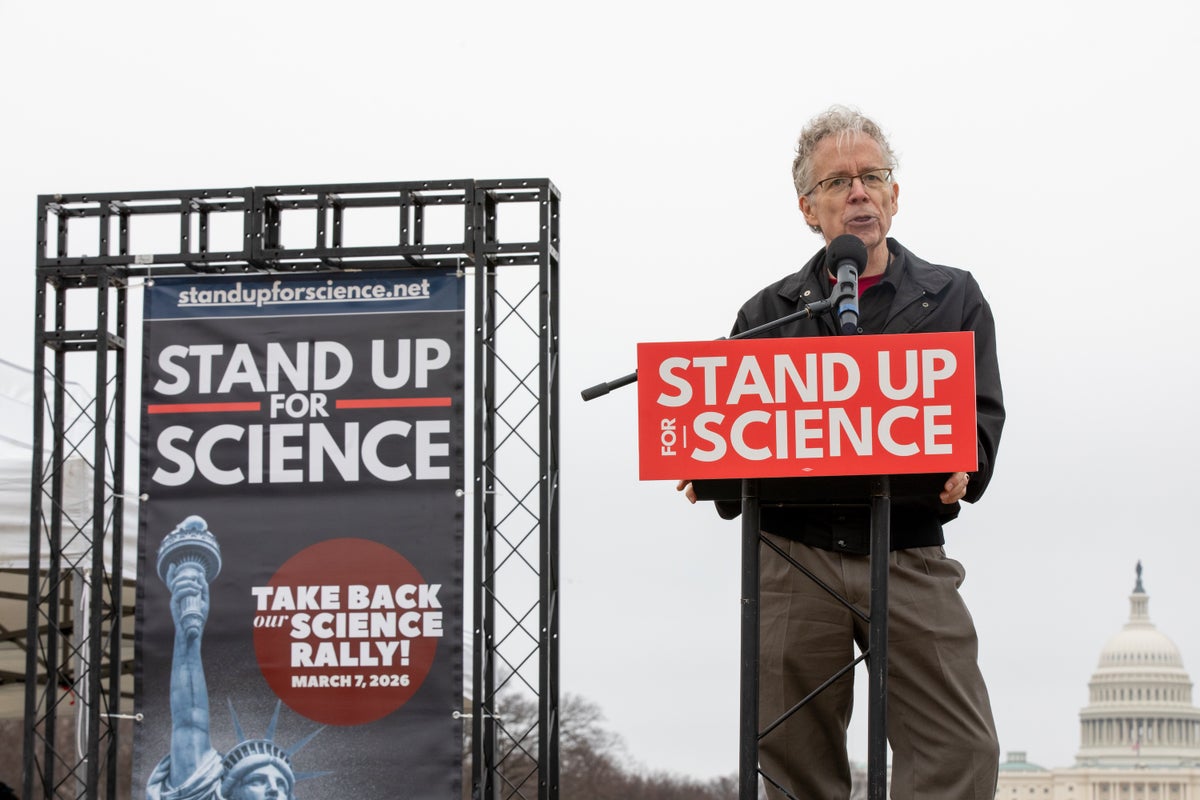
The second annual Stand Up for Science rally drew over 2,000 participants to the U.S. Capitol, with similar protests occurring in more than 50 cities across the country. Government scientists spoke against Trump administration efforts to cut or censor their research. Jenna Norton, a scientist at the National Institute of Diabetes and Digestive and Kidney Diseases, emphasized the importance of scientific integrity and warned that the administration opposes science itself. Norton had filed a whistleblower complaint after being placed on administrative leave. Since the new administration took office in 2025, U.S. science agencies have experienced significant employee losses exceeding those from the previous two decades, with approximately 10,000 Ph.D.-level experts lost through retirements, firings, or buyouts.
"Science needs integrity, Jenna Norton, a scientist at the National Institute of Diabetes and Digestive and Kidney Diseases, who was one of the speakers at the Washington D.C. rally, told Scientific American. "It's important we speak out on how we are affected, and the future of our country." Norton, who filed a whistleblower complaint after the National Institutes of Health placed her on administrative leave in November, told demonstrators on Saturday that the Trump administration is opposed to science itself."
"Since the new Trump administration took office in 2025, U.S. science agencies have lost more employees than over the previous two decades. A further 10,000 or so Ph.D.-level experts in technical fields employed by the U.S. federal government have been lost to retirements, firings or buyouts, Science reported."
"More than 2,000 people turned out for the protest on the National Mall; similar rallies took place in more than 50 cities around the country, according to the organizersup from about a dozen a year ago. There were almost as many signs in the crowd as there were people, as well as a large inflatable duck standing next to the stage as a visual protest against quack medicine."
#scientific-integrity #government-science-policy #trump-administration #science-advocacy #federal-employee-losses
Read at www.scientificamerican.com
Unable to calculate read time
Collection
[
|
...
]