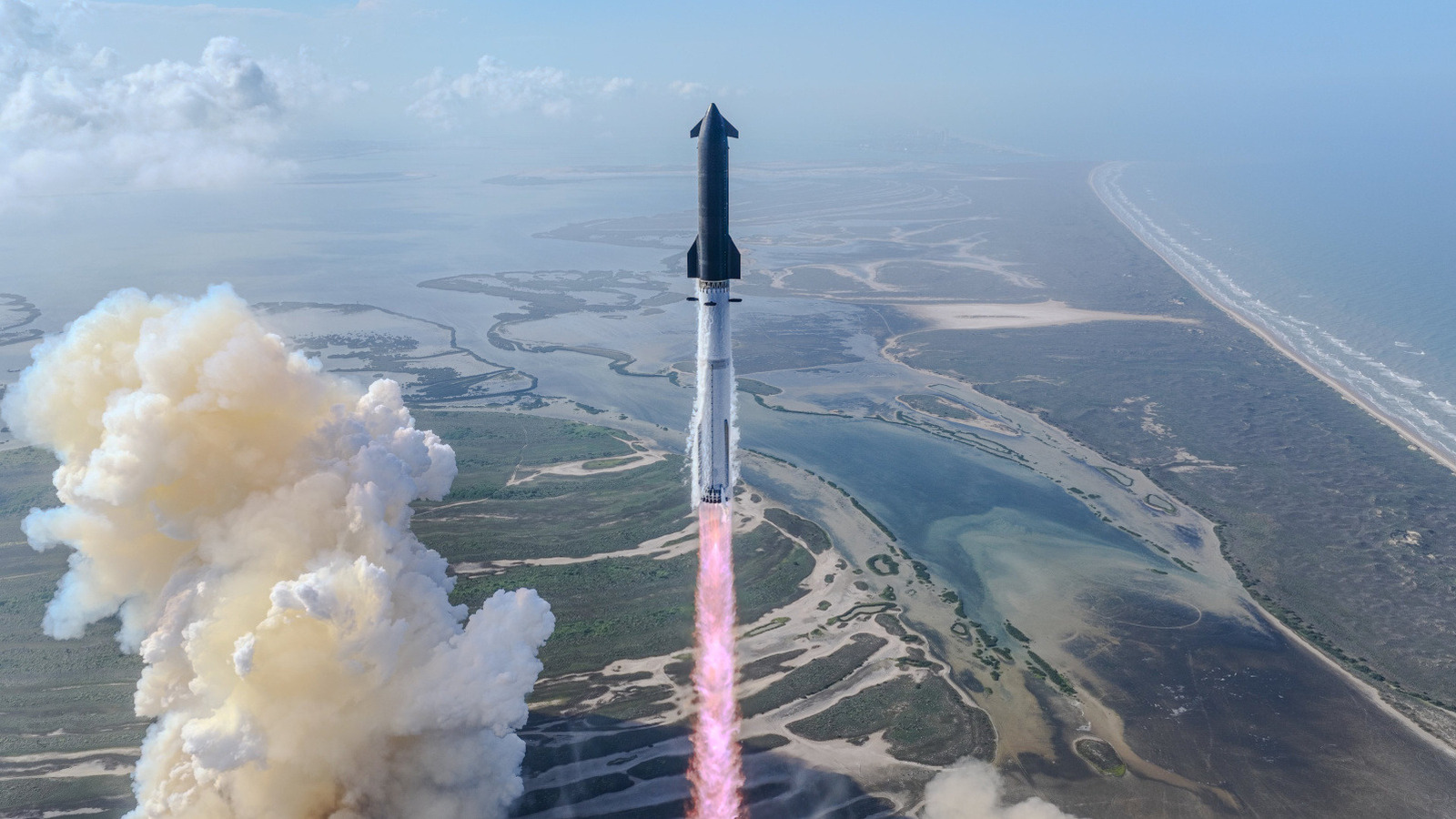
SpaceX flew Starship V3 on a test flight that met most objectives after a May 21 launch attempt was delayed by a hydraulic pin that would not retract. The upgraded spacecraft launched from Starbase, Texas, at 6:30 PM Eastern time with all 33 Super Heavy booster Raptor 3 engines igniting. During ascent, one booster engine shut down, and the booster later performed a directional flip maneuver but could not complete a full boostback burn because it could not light all required engines. The booster crashed into the Gulf of Mexico. The upper-stage Ship continued on its planned trajectory despite losing one of six Raptor 3 engines, deployed 20 Starlink simulators and two modified Starlink satellites about 30 minutes after liftoff, and the satellites captured images during reentry.
"SpaceX has flown Starship V3 for the first time in a test flight that met most of its goals. The company had to step down from a launch attempt on the evening of May 21, Thursday, due to a technical issue. Specifically, a hydraulic pin holding the spacecraft's tower arm in place would not retract. But on Friday night, nothing prevented SpaceX from launching the upgraded version of its spacecraft designed for journeys to the moon and Mars."
"The launch vehicle ignited all 33 of its Super Heavy booster's new Raptor 3 engines and then lifted off at 6:30PM Eastern time from Starbase, Texas. During ascent, one of the booster's engines shut down, but Starship continued its flight until it was time for the stages to separate. The booster was able to perform a directional flip maneuver, which the company wanted to test for future missions. However, it was unable to light all the engines needed to perform a successful boostback burn, the other maneuver necessary for the rocket to be able to travel back towards its landing site."
"It was only able to do a partial boostback burn before falling back to Earth and crashing down into the Gulf of Mexico (renamed the Gulf of America in 2025 by President Donald Trump). It wasn't a loss, however: SpaceX had been catching Super Heavy boosters with its launch tower's mechanical arms in previous flights, but it never intended to recover this one. Meanwhile, the upper-stage Ship was still able to achieve its planned trajectory despite losing one of six Raptor 3 engines."
"Around 30 minutes after liftoff, it deployed the 20 Starlink simulators and two modified Starlink satellites it was carrying. The modified satellites, which were on the same suborbital trajectory as the upper stage, took images of Ship in space. Views of Starship in space from a @Starlink satellite pic.twitter.com/5hfw1n8v1o - SpaceX (@SpaceX) May 22, 2026"
Read at Engadget
Unable to calculate read time
Collection
[
|
...
]