"Someone left a one-star review last month on an AI productivity tool. One line is worth quoting verbatim: "Even notepad from windows 95 had undo. Please add this its 2026 lol." They were complaining about a regenerate button, but they were naming something larger. AI products inherited 50 years of text editing without inheriting its most successful primitive."
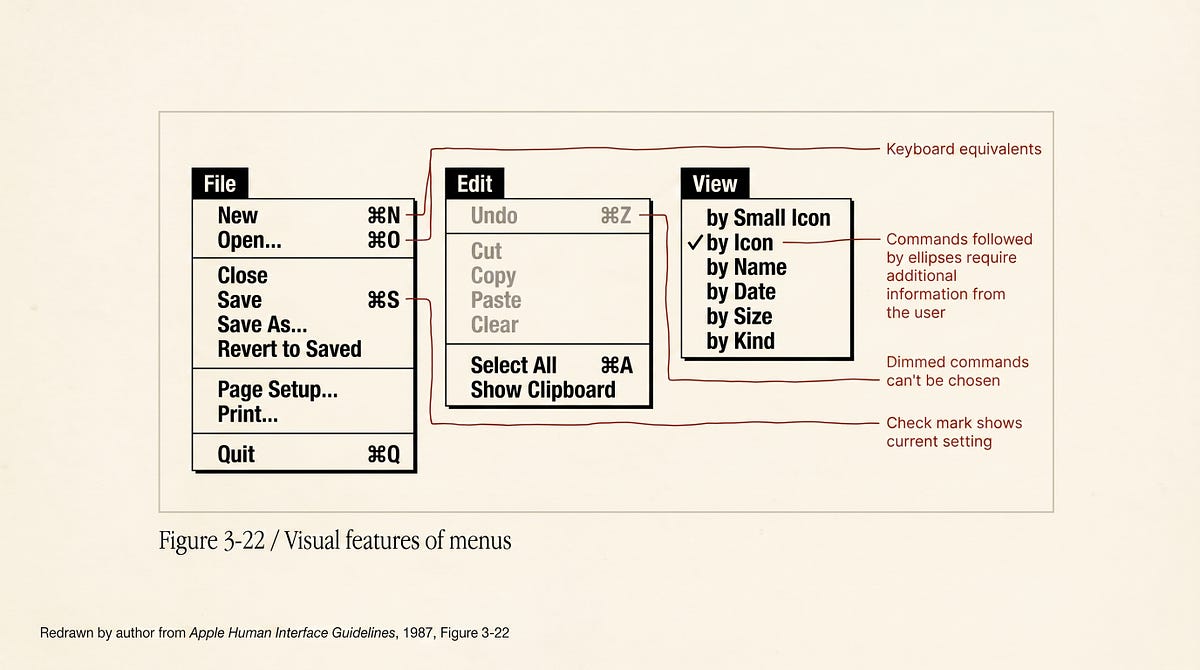
"Cmd+Z is one of the most successful design conventions in the history of personal computing. It works the same way in a 1987 Mac word processor and a 2026 Figma frame. It works in spreadsheets, in IDEs, in photo editors, in text fields on web pages I have never visited. It works without a tutorial, without a settings screen, without a menu. AI products in 2026, the most heavily-funded software category since mobile, do not have it."
"Undo did not arrive fully formed. Its lineage starts at Xerox PARC in the mid-1970s, with Larry Tesler and Tim Mott's Gypsy editor, the first modeless text editor. Modeless editing made undo possible because it meant the system could keep a single history of what the user had done, not separate histories pe"
AI productivity tools frequently lack undo functionality, even though Cmd+Z has been a standard editing convention since early personal computing. A one-star review complained about regenerate behavior, but the underlying issue was the absence of undo. Cmd+Z works consistently across many applications and platforms without requiring tutorials or settings. Undo’s history traces back to Xerox PARC’s Gypsy editor in the mid-1970s, where modeless editing enabled a single history of user actions. This history supports reliable reversal of changes, making undo a foundational usability primitive that modern AI tools have not inherited.
Read at Medium
Unable to calculate read time
Collection
[
|
...
]