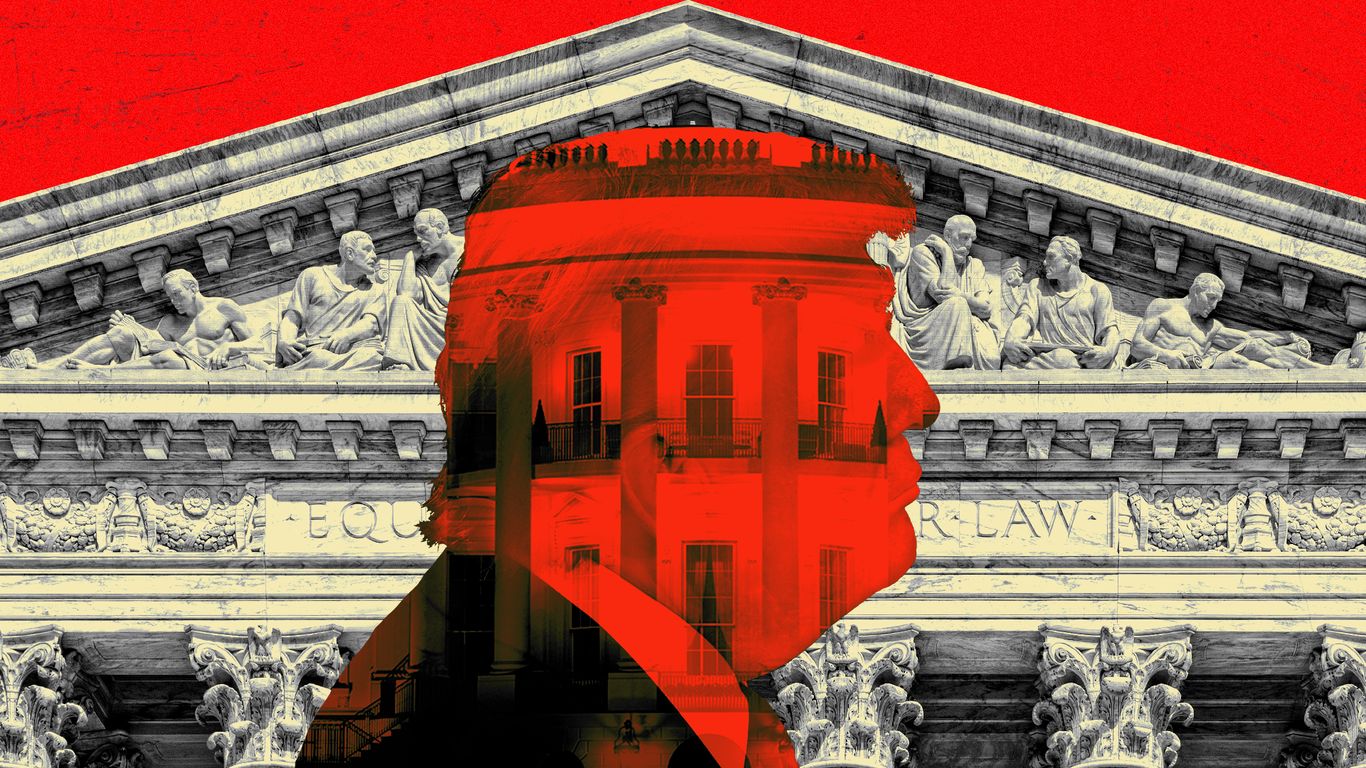
"In a 6-3 ruling, the Supreme Court said that affirming Trump's use of the International Emergency Economic Powers Act (IEEPA) would "represent a transformative expansion of the President's authority over tariff policy." Chief Justice John Roberts said that IEEPA does not authorize the president to impose tariffs because the Constitution grants Congress - and only Congress - the power to levy taxes and duties."
"Before the ruling, Penn Wharton estimated that a rejection by the court would remove more than $175 billion in expected annual tariff collections. Threat level: The ruling will give way to a potentially chaotic refund process for businesses. The Supreme Court leaves that to the Trump administration. "The Court says nothing today about whether, and if so how, the government should go about returning the billions of dollars that it has collected from importers," Justice Brett Kavanaugh wrote in his dissent."
The Supreme Court ruled 6-3 that the International Emergency Economic Powers Act (IEEPA) does not authorize the president to impose tariffs, noting the Constitution grants tariff authority to Congress alone. The decision removes a presidential "on/off" tariff capability and means future tariffs must come through established trade authorities or congressional action. Fitch Ratings called the outcome a material rollback, with more than 60% of 2025 tariffs effectively vanishing. Yale Budget Lab estimates the effective tariff rate would fall to 9.1% from roughly 17%. Penn Wharton estimated the ruling could remove over $175 billion in expected annual tariff collections. The decision leaves refund procedures and international responses uncertain and affects trade deals tied to IEEPA tariffs.
Read at Axios
Unable to calculate read time
Collection
[
|
...
]