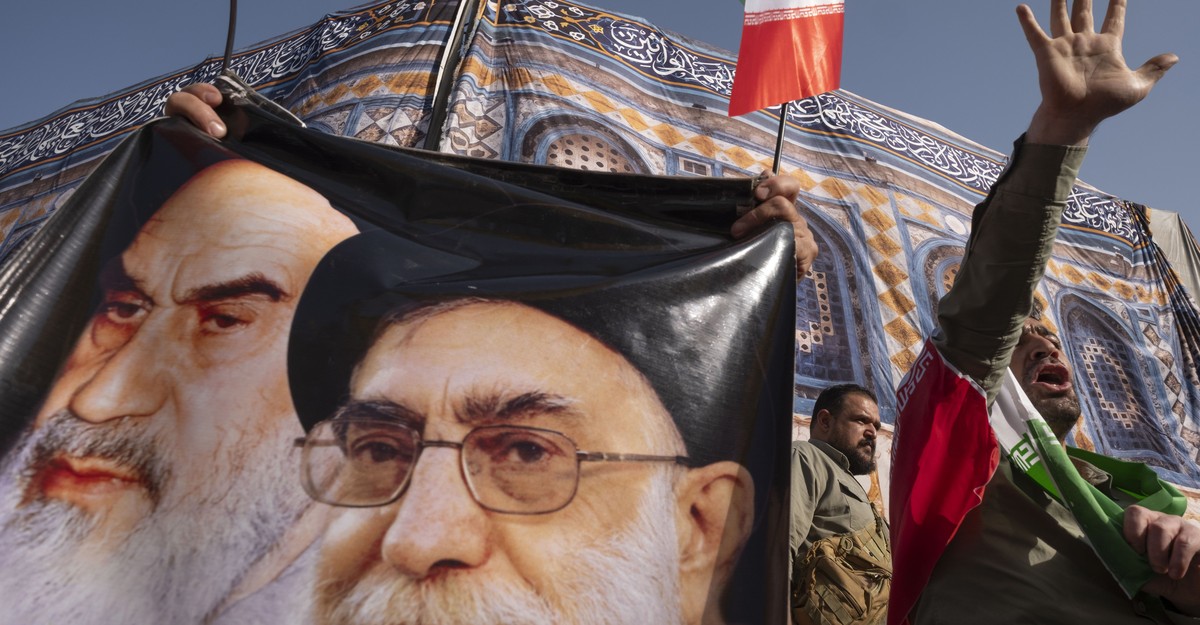
"This is not a preemptive war. It is a war of choice, a discretionary war. It is a war for regime change. Many of Iran's 92 million people want the regime removed. But it is far from certain that this will be the outcome."
"Iran is not presenting immediate danger to the United States or Israel. Even President Trump, in a recorded address, didn't bother overly much with such excuses; instead he presented a farrago of charges and accusations going back a half-century that included everything from killing American troops in Iraq to terrorism."
"Second, "success" is not impossible - if by "success" we mean the fall of the ayatollahs and the rise of a better, more humane, pro-Western government that does not seek to destabilize the Middle East, dominate Lebanon, Iraq and Yemen, and eradicate Israel. But the path to that success is exceedingly narrow and mined with significant hazards."
The United States has initiated military operations against Iran with Israel as its primary ally, while Gulf Arab states remain uninvolved despite their own concerns about Iranian threats. Both nations justify their actions using claims of imminent danger requiring preemptive strikes, but these justifications lack credibility. President Trump's recorded address instead presented historical grievances spanning decades, including Iranian actions in Iraq and terrorism, none of which constitute rationale for immediate military action. This conflict represents a war of choice aimed at regime change rather than defensive necessity. While Iran's government is oppressive and many Iranians desire its removal, military success remains uncertain. Understanding the conflict requires acknowledging three key realities: Iran's regime is genuinely terrible and deserves to fall, success is theoretically possible but requires an extremely narrow path forward, and destroying regime capabilities proves easier than achieving lasting political transformation.
Read at The Atlantic
Unable to calculate read time
Collection
[
|
...
]