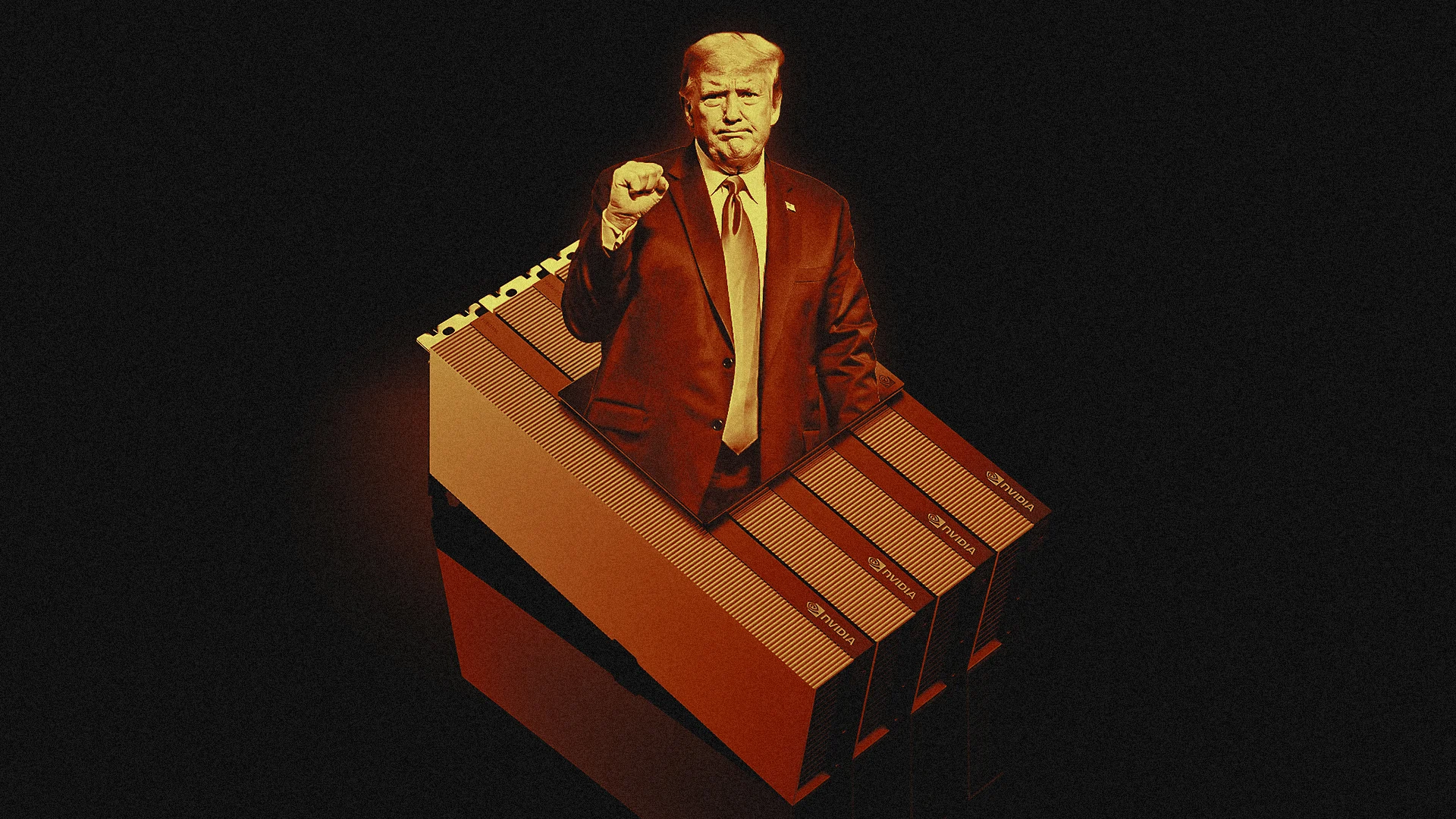
"On Tuesday last week, the United States approved the export of Nvidia's H200 GPUs-the second-most advanced computer chips powering the generative AI revolution-to markets that include China. The decision was granted with caveats. Supplies could be forestalled if the U.S. began running short, for one thing. But it was an approval. Then, 24 hours later, the White House levied a 25% tariff against the same chips at the point they're imported into the United States."
"That matters because, under the rules Trump instigated on Tuesday, all those H200 chips that could be exported to mainland China after being fabricated in Taiwan must first make their way to the United States to be tested before being re-exported to customers. That adds up to a bigger bill for Chinese tech companies wanting to import cutting edge chips into their country. (To avoid this, China is building up its domestic AI chip development and manufacturing capacity, and recently issued its own counter‑ban on the import and use of H200 chips.)"
US regulators approved exports of Nvidia's H200 GPUs to markets including China while reserving the right to halt supplies if domestic stock ran short. Within 24 hours the White House imposed a 25% tariff on imports of the same chips into the United States. New rules require H200 chips fabricated in Taiwan and bound for mainland China to first route to the United States for testing before re‑export, raising costs for Chinese firms and prompting China to accelerate domestic AI chip development and issue a counter‑ban. The shifting measures disrupt chipmakers and reverberate across AI hardware supply chains and global markets, increasing investment uncertainty.
Read at Fast Company
Unable to calculate read time
Collection
[
|
...
]