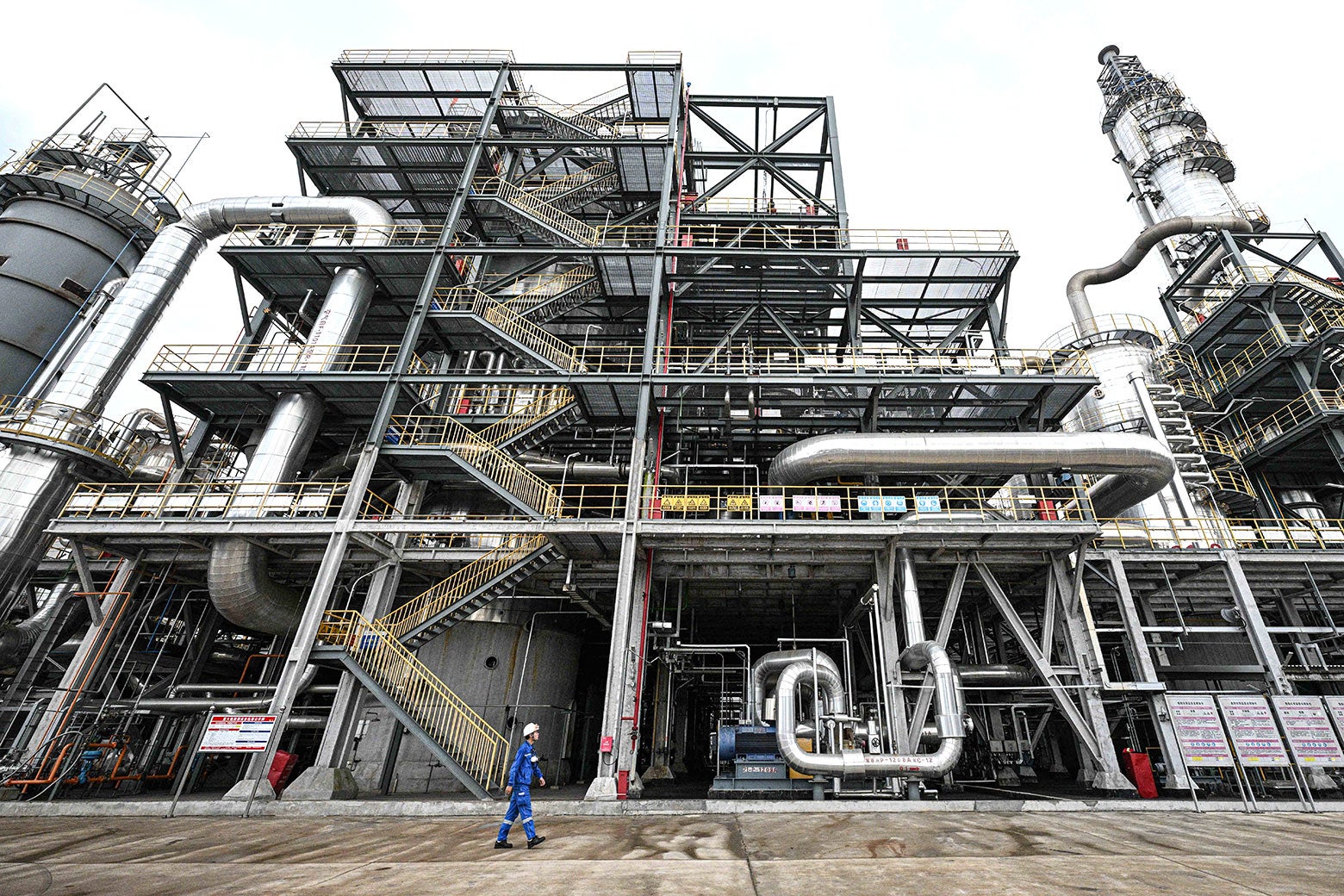
"No country on Earth is fully insulated from the Iran fallout, but China has a better shot than any other global superpower of weathering this crisis over the long term, as it drastically reduced its need for oil through a blitz of electrification and renewables development. The U.S., meanwhile, has done the exact opposite under Trump-to its detriment on the world stage, now and in the future."
"China's rapid efforts to shrink its fossil-fuel dependence are paying off here. Electric and hybrid cars have overtaken the roadways. New power generation is largely covered by solar and wind sources, plus battery storage. Overall demand for oil and gas is projected to peak and decline by the next decade."
"Iran is doing everything it can to target Donald Trump's greatest weakness: fossil fuels. The regime, responding in kind to the devastating strikes on its oil and gas facilities, is directly attacking energy infrastructure in the surrounding region and shutting down the Strait of Hormuz-a key transmission point for 20 percent of the world's oil supply-until further notice."
A military conflict has triggered the worst global energy shock since the 1970s, with Iran targeting energy infrastructure and closing the Strait of Hormuz, which handles 20 percent of world oil supply. Gasoline prices rise while strategic reserves deplete. European and Asian nations reconsider LNG dependencies as Qatar halts exports and Gulf production declines. China emerges as the primary beneficiary despite being the world's largest net crude oil importer. Through aggressive electrification and renewable energy expansion, China has substantially reduced fossil fuel dependence, with electric and hybrid vehicles dominating roads and solar and wind sources covering most new power generation. The U.S., conversely, has increased fossil fuel reliance under current policy, positioning it disadvantageously during this energy crisis compared to China's resilient infrastructure.
Read at Slate Magazine
Unable to calculate read time
Collection
[
|
...
]