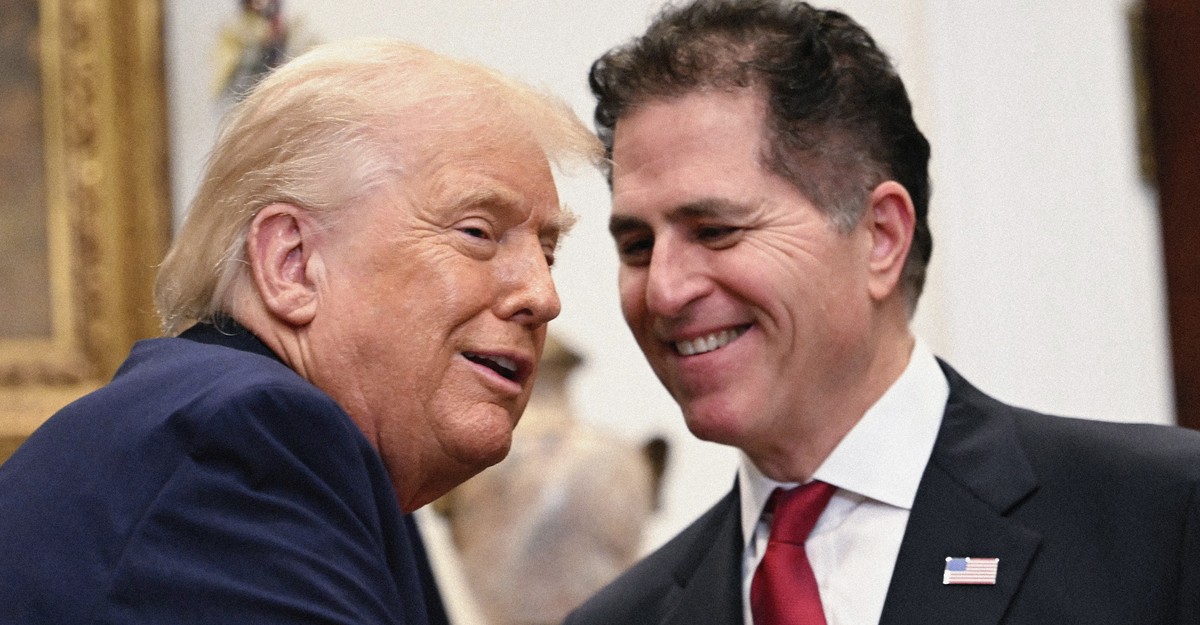
"Trump Accounts-yes, that is the official name-function basically as individual retirement accounts for kids. Any parent or guardian can open one up for a child starting in 2026, and family, friends, and employers can contribute $5,000 total each year. These accounts will then be invested in index funds, and withdrawals are largely prohibited until the child turns 18. All American children born from January 1, 2025, to December 31, 2028, will be entitled to a onetime $1,000 contribution from the government."
"President Donald Trump and his supporters are billing Trump Accounts as a vehicle to set the next generation "on a course for prosperity" and transform the lives of low-income and working-class people. In reality, the program is an interesting yet modest experiment in giving American children a stake in the stock market. Trump Accounts, in other words, are perfectly Trumpian down to the name, in that they deliver a lot of sizzle but not much steak."
"The White House's press release about the Dell gift hails these accounts as an initiative "to give every newborn child a head start toward lifelong financial security and the American Dream." In a press conference last week with the Dells and Trump, Texas Senator Ted Cruz painted a glowing picture of how these accounts could help a little girl born next year to "a single mom waiting tables," suggesting that by the time she is 18, she could have $170,000 in her account."
Trump Accounts function as individual retirement-style investment accounts for children, openable by parents or guardians beginning in 2026. Family members, friends, and employers can contribute up to $5,000 per year, with funds invested in index funds and withdrawals largely prohibited until age 18. Children born between January 1, 2025, and December 31, 2028, receive a one-time $1,000 government seed contribution. Michael and Susan Dell pledged $6.25 billion to provide $250 deposits for millions of low-income children in targeted zip codes. Supporters present the program as promoting lifelong financial security, while critics call it a modest stock-market stake.
Read at The Atlantic
Unable to calculate read time
Collection
[
|
...
]