"At issue is the Trump administration's use of the International Emergency Economic Powers Act (IEEPA) to justify some of its tariffs, including its baseline 10% duty on almost all nations. IEEPA, passed by Congress in 1977, gives the President " broad authority " on economic issues like tariffs after declaring a "national emergency," for which the White House has pointed to elevated fentanyl imports from abroad."
"Although not guaranteed, it's possible the Supreme Court will decide the fentanyl crisis can't be used as an emergency to justify broad tariffs on U.S. trading partners, which would make many of the administration's tariffs invalid. In that case, the White House will just pivot to another justification to make tariffs permanent, said Bessent during the New York Times DealBook Summit this week."
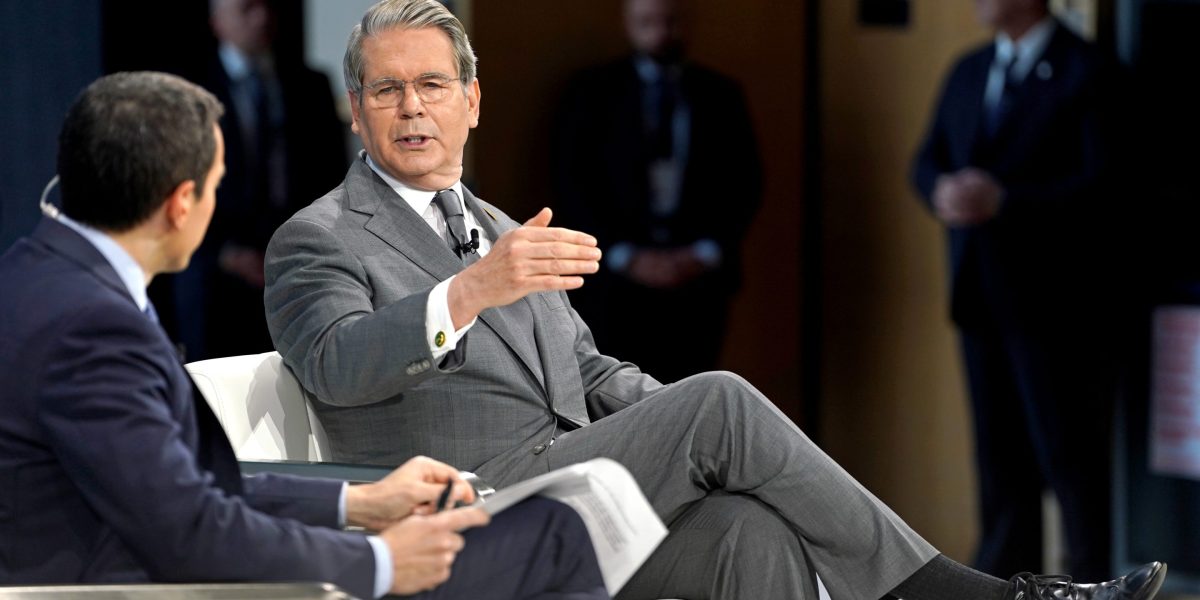
""We can recreate the exact tariff structure with 301's, with 232's, with the, I think they're called 122's," he said, referring to several sections of various trade acts that could serve as alternatives to the administration's current justification for its tariffs. When interviewer and DealBook editor Andrew Ross Sorkin questioned whether these measures could exist permanently, Bessent replied "permanently." He later clarified that tariffs under Section 122 of the Trade Act of 1974 would not be permanent."
"In sum, the Constitution gives Congress purview over tariffs, but over the years it has given the executive branch more leeway to levy them through the trade acts mentioned by Bessent. Each of the sections Trump's team may consider comes with its own set of pros and cons. Section 122 would be the quickest method to restore tariffs in the case of a Supreme Court loss because it doesn't require an investigation on a trading partners' practices."
The Supreme Court is weighing the legality of tariffs justified under the International Emergency Economic Powers Act (IEEPA), which the White House invoked citing elevated fentanyl imports as a national emergency. If the Court rules the fentanyl crisis cannot justify broad tariffs, many IEEPA-based duties could be invalidated. The administration can reestablish similar tariffs using other trade statutes such as Section 301, Section 232, or Section 122 of the Trade Act of 1974, according to Treasury Secretary Scott Bessent. Section 122 would allow rapid restoration because it does not require an investigation into trading partners' practices. Constitutional authority over tariffs nominally resides with Congress, though trade statutes have expanded executive latitude.
Read at Fortune
Unable to calculate read time
Collection
[
|
...
]