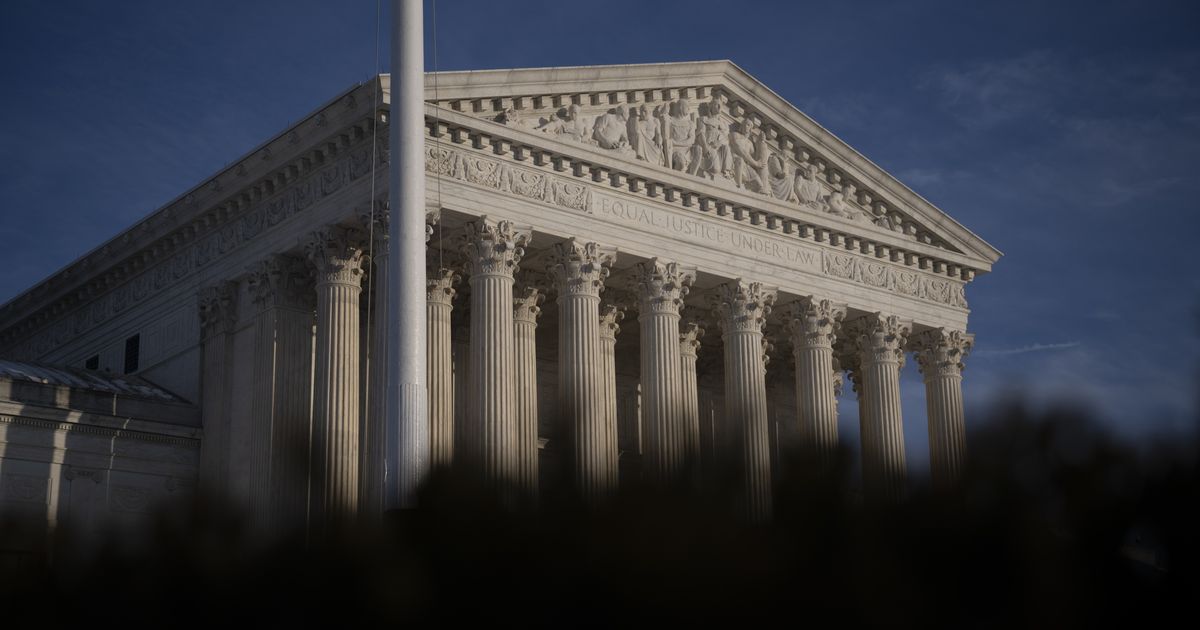
"In a long-awaited and complex decision, a 6-3 majority of the U.S. Supreme Court invalidated President Trump's principal device for imposing tariffs during his second term as a usurpation of congressional powers. The decision left open the possibility that Trump could reimpose some tariffs based on different assertions of authority, and didn't reach the explosive question of whether and how importers paying the illegitimate duties might secure refunds from the U.S. Treasury."
"Six justices (Chief Justice John Roberts, joined by conservatives Neil Gorsuch and Amy Coney Barrett and the Court's three liberals Sonia Sotomayor, Elena Kagan, and Katanji Brown Jackson) agreed Trump had overstepped constitutional boundaries by claiming the 1977 International Emergency Economic Powers Act authorized him to impose his "Liberation Day" reciprocal tariffs on a host of countries, along with specific tariffs on Mexico, Canada and China. But they disagreed on their reasoning."
"[T]he Government reads IEEPA to give the President power to unilaterally impose unbounded tariffs and change them at will. That view would represent a transformative expansion of the President's authority over tariff policy. It is also telling that in IEEPA's half century of existence, no President has invoked the statute to impose any tariffs, let alone tariffs of this magnitude and scope."
A 6-3 Supreme Court majority invalidated President Trump's use of the International Emergency Economic Powers Act (IEEPA) to impose broad tariffs, finding it an unconstitutional usurpation of congressional authority. The ruling left open the possibility that some tariffs could be reimposed under different asserted authorities and did not resolve whether importers could obtain refunds for duties already paid. Six justices agreed the IEEPA did not authorize the tariffs, though they split on legal reasoning. Chief Justice Roberts relied on the major questions doctrine and emphasized the statute's lack of historical precedent for tariff imposition. The outcome marks a significant judicial restraint on executive power.
Read at Intelligencer
Unable to calculate read time
Collection
[
|
...
]