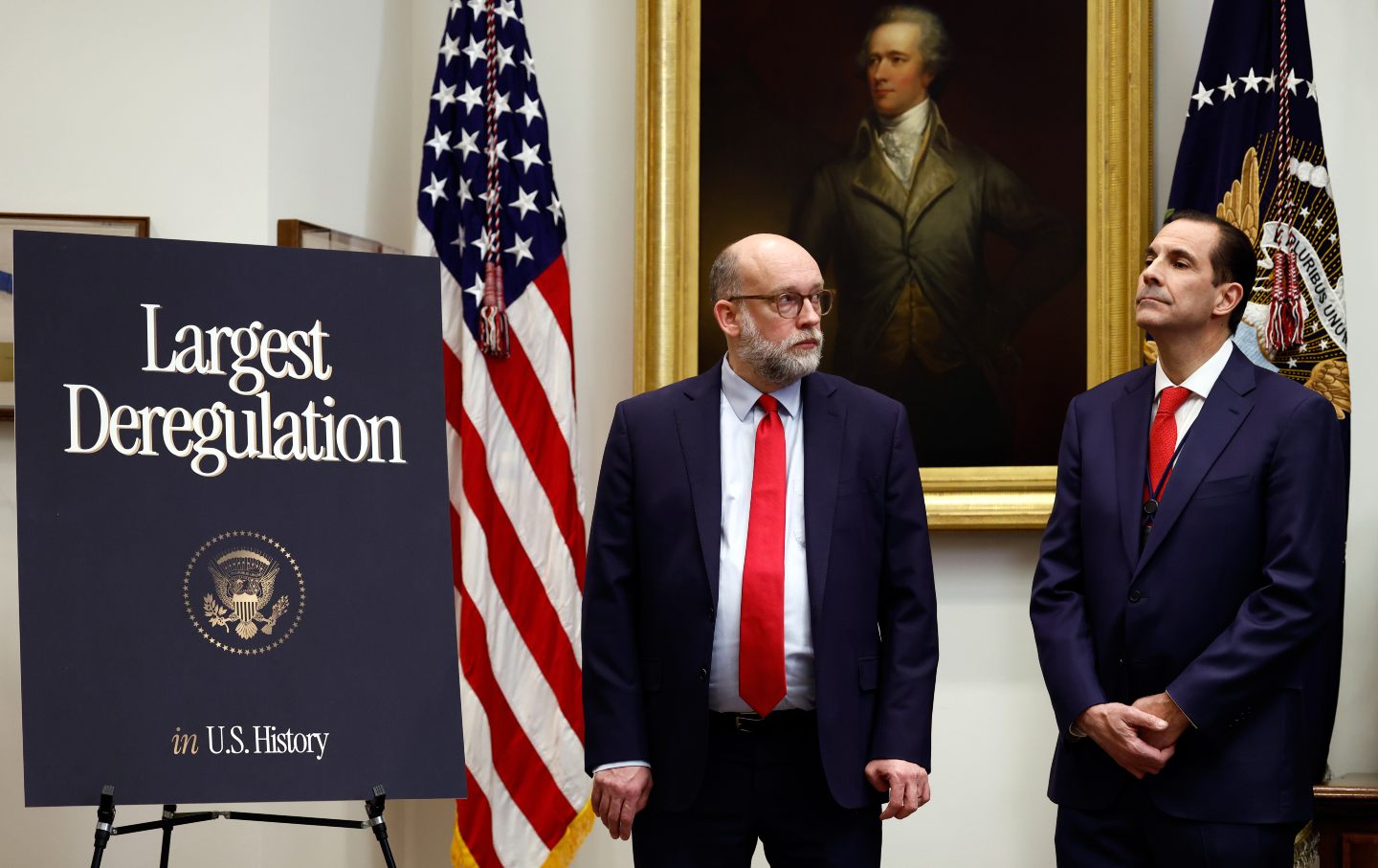
"The New York Times recently reported that four conservative operatives spent the Biden years quietly building the legal and regulatory infrastructure to kill the federal government's ability to fight climate change. Russell Vought. Jeffrey Clark. Mandy Gunasekara. Jonathan Brightbill. They drafted executive orders. They got Heritage Foundation money. They solicited white papers from friendly scientists. They built the whole thing in secret so nobody could stop them before it was done."
"Now they're about to revoke the endangerment finding, the scientific determination that has underpinned every federal climate regulation since 2009. Myron Ebell, who's been attacking climate science for damn near three decades, told the Times they were "pretty close to total victory." He's not wrong. They didn't tweak the rules. They removed the foundation the rules were built on. Any future administration that wants to regulate greenhouse gases has to start from nothing."
"But when Bernie says we need to overturn Citizens United, I need him to finish that thought. Because overturning Citizens United requires a constitutional amendment. Two-thirds of both chambers of Congress, or a convention of states. Supermajorities in the House and Senate. Dealing with a Supreme Court that is openly hostile to everything we believe in. These are massive generational undertakings, and nobody on our side is building the infrastructure to accomplish any of them."
Conservative operatives quietly built legal and regulatory infrastructure to eliminate the federal government's ability to address climate change, including drafting orders, securing think-tank funding, and preparing scientific white papers in secret. They seek to revoke the endangerment finding that underpins greenhouse-gas regulation, forcing future administrations to rebuild regulatory authority from scratch. Major democratic reforms like overturning Citizens United require constitutional amendments and massive political infrastructure that currently does not exist. Political energy often produces slogans rather than sustained institution-building. The case demonstrates the need for organized, long-term efforts to rebuild manufacturing, democratic institutions, and public ownership to protect collective interests.
Read at The Nation
Unable to calculate read time
Collection
[
|
...
]