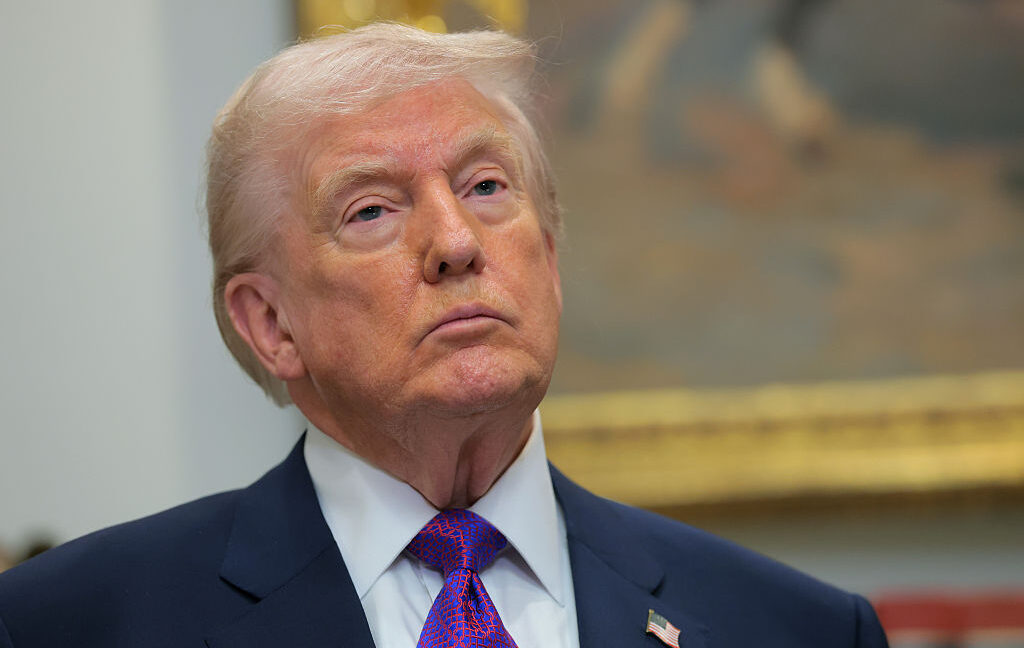
"The Supreme Court ruled Friday that Donald Trump was not authorized to implement emergency tariffs to ostensibly block illegal drug flows and offset trade deficits. It's not immediately clear what the ruling may mean for businesses that paid various "reciprocal" tariffs that Trump changed frequently, raising and lowering rates at will during tense negotiations with the United States' biggest trade partners."
"Only Congress has the power of the purse, Roberts wrote, and the few exceptions to that are bound by "explicit terms and subject to strict limits." "Against that backdrop of clear and limited delegations, the Government reads IEEPA to give the President power to unilaterally impose unbounded tariffs and change them at will," Roberts wrote. "That view would represent a transformative expansion of the President's authority over tariff policy."
The Supreme Court held that the International Emergency Economic Powers Act (IEEPA) does not authorize a president to impose emergency tariffs. The Court, in a 6-3 decision, remanded cases to lower courts and concluded that President Trump lacked authority to implement tariffs aimed at blocking illegal drug flows and offsetting trade deficits. Chief Justice John Roberts, joined by six justices, emphasized that only Congress controls tariff authority and statutory delegations must be explicit and limited. The opinion noted that no prior president had used IEEPA to impose tariffs of this scope. Economists estimate potential government refund liabilities exceeding earlier $1 billion figures.
Read at Ars Technica
Unable to calculate read time
Collection
[
|
...
]