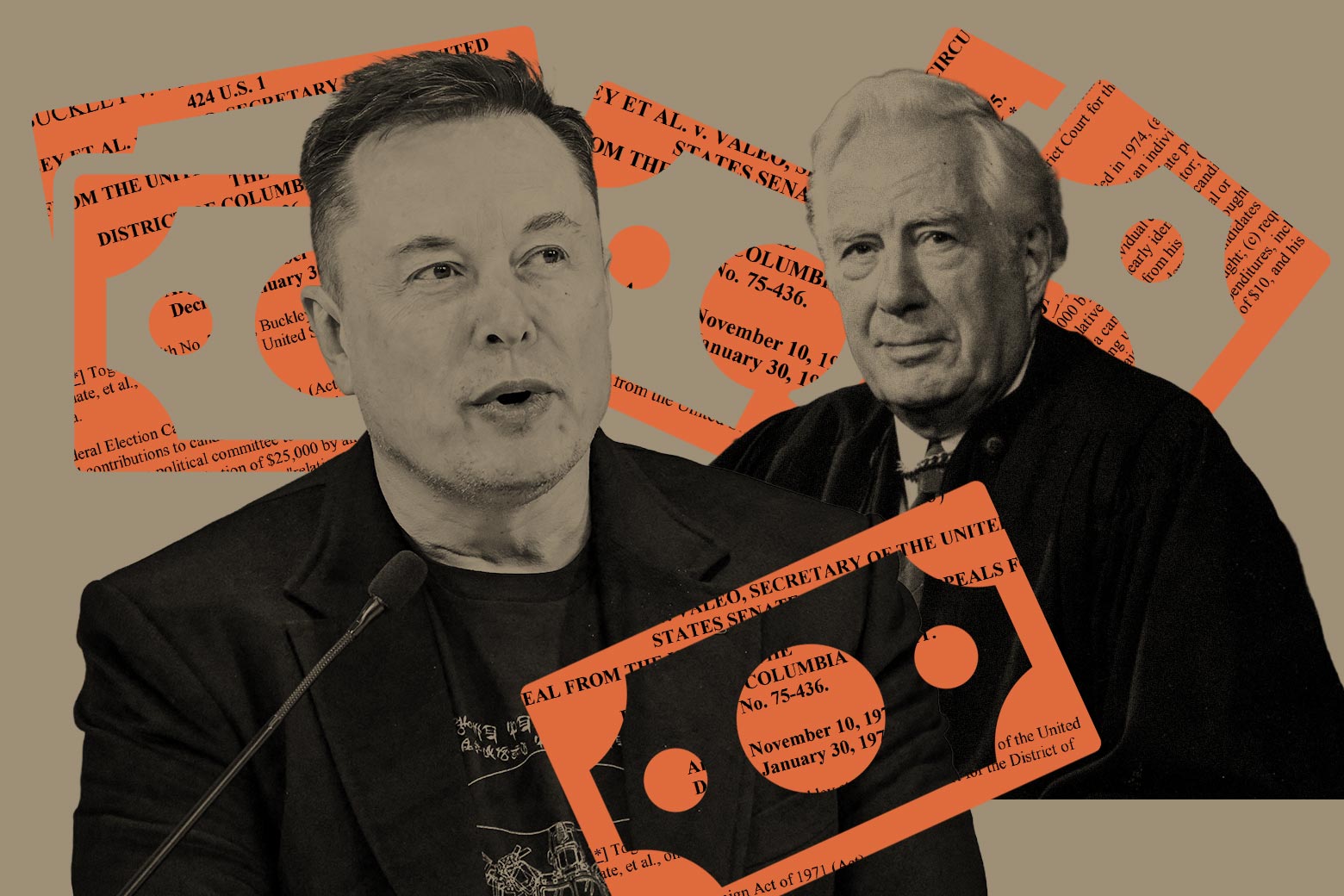
"That Supreme Court decision, Buckley v. Valeo, happens to turn 50 years old this week. It's Buckley, and not the often-excoriated 2010 Roberts court decision in Citizens United v. FEC, that created the conditions for the ultrawealthy to transform their vastly unequal economic power into lopsided political power, and for a billionaire like Elon Musk to contribute a staggering $291 million to help elect Republican candidates, including Donald Trump, in 2024."
"Following President Richard Nixon's resignation in August 1974, Congress once again took up the question of money in politics. It had passed the Federal Election Campaign Act in 1971, but it was clear that more was needed after investigations into Nixon and Watergate revealed many campaign finance abuses, such as the Nixon reelection campaign shaking down large American corporations for illegal six-figure donations, delivered sometimes in cash or laundered through foreign accounts."
The 1974 FECA amendments responded to Watergate-era abuses by adding disclosure rules, contribution limits, voluntary public financing, and creating the Federal Election Commission. The Supreme Court decision Buckley v. Valeo limited restrictions on campaign spending while allowing contribution limits, enabling independent expenditures and creating pathways for wealthy actors to exert disproportionate political influence. That framework, later amplified by subsequent rulings and practices, allowed ultrawealthy donors to spend enormous sums supporting candidates. Reversing these incentives would likely require a constitutional amendment or Court reform, but the concentrated financial power benefiting from the current system makes meaningful reform difficult.
Read at Slate Magazine
Unable to calculate read time
Collection
[
|
...
]