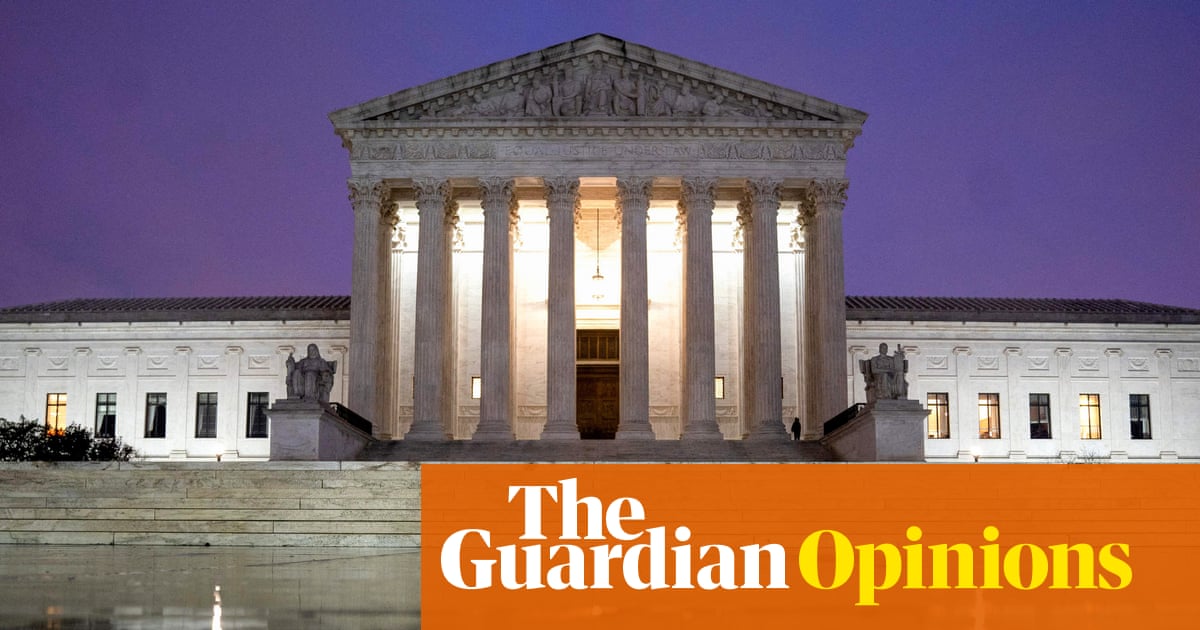
"The justices of the US supreme court even its conservatives have traditionally valued their institution's own standing. John Roberts, the current US chief justice, has always been praised even by liberals as a staunch advocate of the court's image as a neutral arbiter. For decades, Americans believed the court soared above the fray of partisan contestation. No more. In Donald Trump's second term, the supreme court's conservative supermajority has seized the opportunity to empower the nation's chief executive."
"Attention to the body's legitimacy surged in the decades after the extraordinary discussion on the topic in Planned Parenthood of Southeastern Pennsylvania v Casey the 1992 case that famously preserved the abortion rights minted in Roe v Wade despite recent conservative additions to the court. The Court's power lies in its legitimacy, former justices Anthony Kennedy, Sandra Day O'Connor and David Souter explained in their joint opinion, a product of substance and perception"
The Supreme Court historically relied on institutional legitimacy and a public image of neutral adjudication. Chief Justice John Roberts embodied that commitment to the Court's standing. That standing has eroded as a conservative supermajority in the Court used opportunities in Donald Trump's second term to expand presidential power. Public approval of the Court has fallen sharply as the body appears indifferent to popular and legal-community opinion. The 1992 Casey framework emphasized that the Court's authority depends on popular acceptance, a product of both substantive rulings and public perception. Liberals face choices beyond nostalgia to restore the Court's democratic role.
Read at www.theguardian.com
Unable to calculate read time
Collection
[
|
...
]