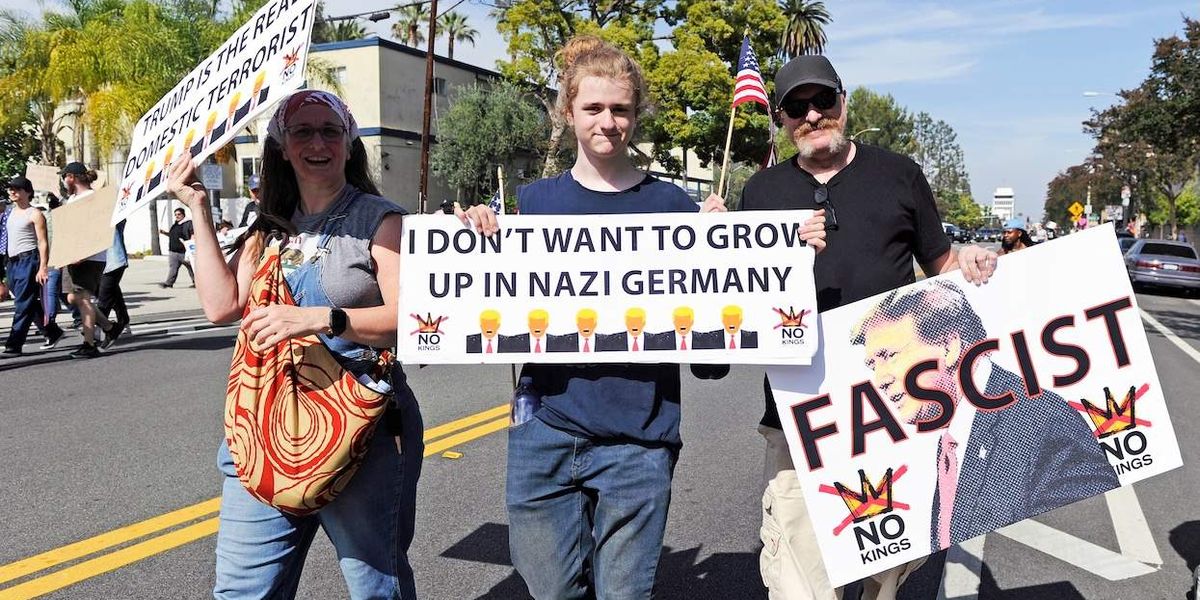
"Now the movement has pivoted from a newsmaking spectacle to political strategy, connecting newcomers to mutual aid projects and building what one organizer calls "protest muscle" for the long haul. "We started out just putting signs on the sidewalks," Hunter Dunn, the group's press coordinator told during a long discussion. "Now we're going down to detention facilities and demanding that people be let go." Dunn described a movement shifting from one-day displays of large crowds to sustained, coordinated pressure on institutions it sees as pillars of an authoritarian administration."
"Early gatherings, Dunn said, were valuable for visibility and solidarity. But organizers soon saw the limits of isolated demonstrations. The second wave of actions focused on concrete targets, detention centers, boycotts, and union drives to create leverage that outlasted a single day. "The main difference is what happens the next week or the next month," Dunn said. "It's not what No Kings did that day but what the connections people made on that day go on to do.""
Many people unexpectedly turned out to early June protests. Organizers focused on getting people into the streets to demonstrate collective dissent. The movement pivoted from spectacle to political strategy, linking newcomers to mutual aid, legal defense, and worker organizing. Organizers built "protest muscle" to sustain pressure beyond one-day demonstrations. Actions shifted toward detention centers, boycotts, union drives, and targeted institutional pressure to create durable leverage. Visible mass events became opportunities to recruit volunteers and strengthen community networks. Leaders described the long game as a relay race, where large demonstrations pass the baton to local groups that conduct everyday organizing and maintain momentum.
Read at Advocate.com
Unable to calculate read time
Collection
[
|
...
]