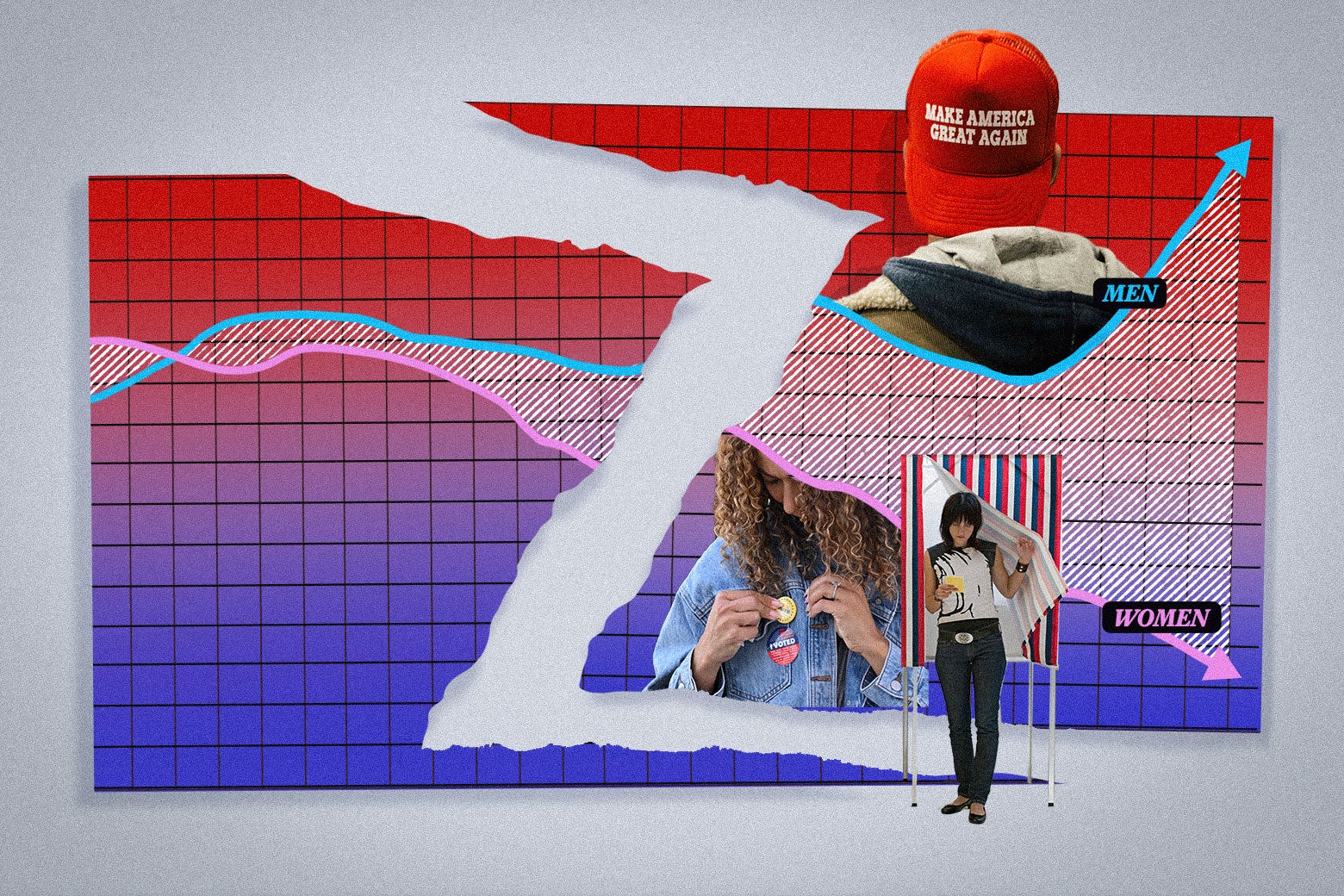
"In 2024 there was great panic over young voters' drift toward Donald Trump. But in 2025, after young voters in New York City, New Jersey, and Virginia helped deliver Democratic wins, there was a reassessment. In light of these liberal victories, many put forward amended evaluations, stating that Gen Z is both more participatory and progressive than it has been given credit for, and that concerns about Democratic erosion among young men, spurred by the influence of the "manosphere," have been exaggerated."
"The short answer is that it's complicated, and neither of those dueling narratives gets to the truth. The slightly longer answer is this: According to the best available data, on issues of race, members of Gen Z are, on average, far more progressive than any of their older counterparts. But when it comes to attitudes toward gender, Gen Z members are no more progressive than the rest of us."
Young voter behavior between 2024 and 2025 produced mixed signals: initial concern about a drift toward Trump followed by Democratic successes in several states. National survey data show Gen Z is the most progressive generation on racial attitudes based on the 2024 Cooperative Election Study of over 60,000 Americans. Gen Z's gender attitudes, however, align with older cohorts and are not distinctly more progressive. The manosphere appears to influence some young men, contributing to worries about party erosion. The racial–gender divergence carries important implications for U.S. politics and how a digital native generation interprets media.
Read at Slate Magazine
Unable to calculate read time
Collection
[
|
...
]