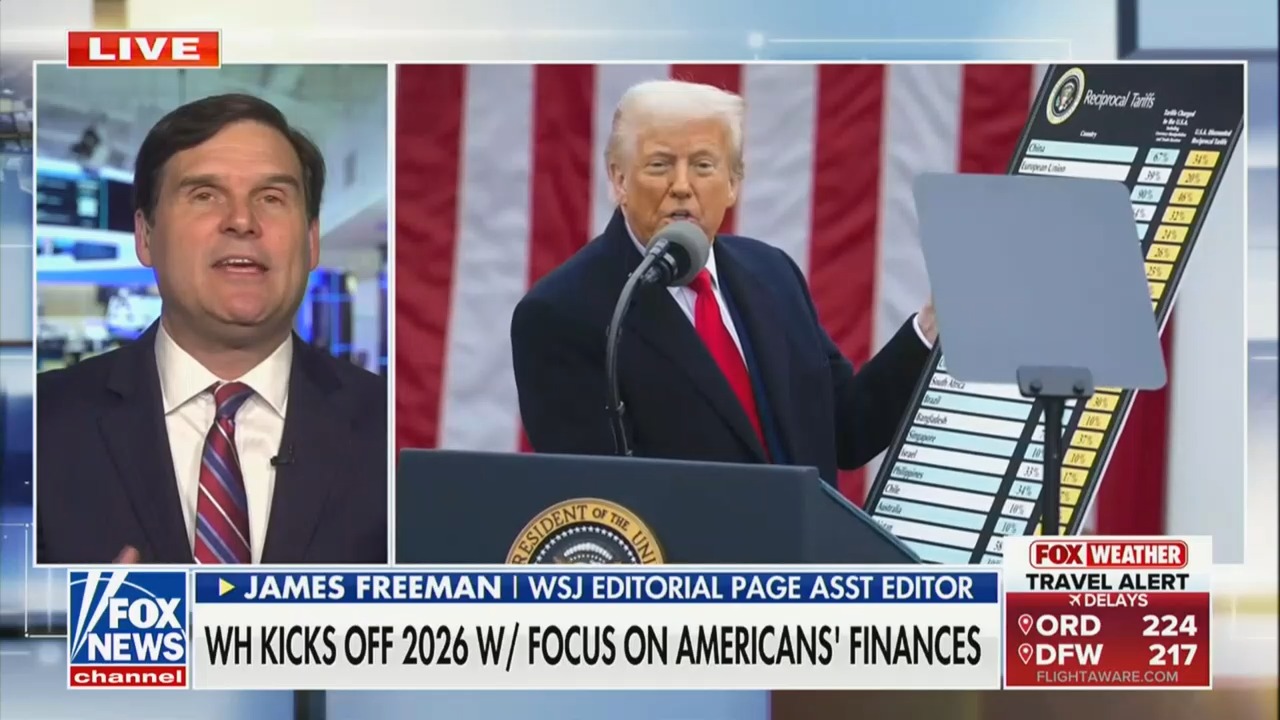
"Well, tariffs are taxes. They may or may not change inflation, but they definitely discourage economic activity. To give credit to the president, we want to keep an open mind, sometimes these negotiations, when he puts a high tariff on, do lead to positive changes from counterparts overseas or even our neighbors. We look at Canada getting rid of that digital services tax good thing."
"But in general, the tariff burden is a burden on the economy, it's a tax, replied Freeman. This is good news that he's lowering some on furniture, etc. I think the Supreme Court will do consumers and also the president a big favor by knocking out his emergency, quote-unquote 'emergency tariffs.' He is not going to be happy about it but I think it would be more fuel for a-, what is as we said a pretty good economy."
President Donald Trump has implemented unilateral emergency tariffs that function as taxes and discourage economic activity. Tariffs may not clearly change inflation but they place burdens on consumers and the broader economy. High tariffs can sometimes prompt trade partners to alter policies, as seen when Canada removed a digital services tax. Reductions in tariffs on goods like furniture lower consumer costs. A judicial decision invalidating emergency tariffs would remove tariff burdens, likely benefiting consumers and adding momentum to an already relatively strong economy. The president continues to advocate tariff use despite potential economic drawbacks.
Read at www.mediaite.com
Unable to calculate read time
Collection
[
|
...
]