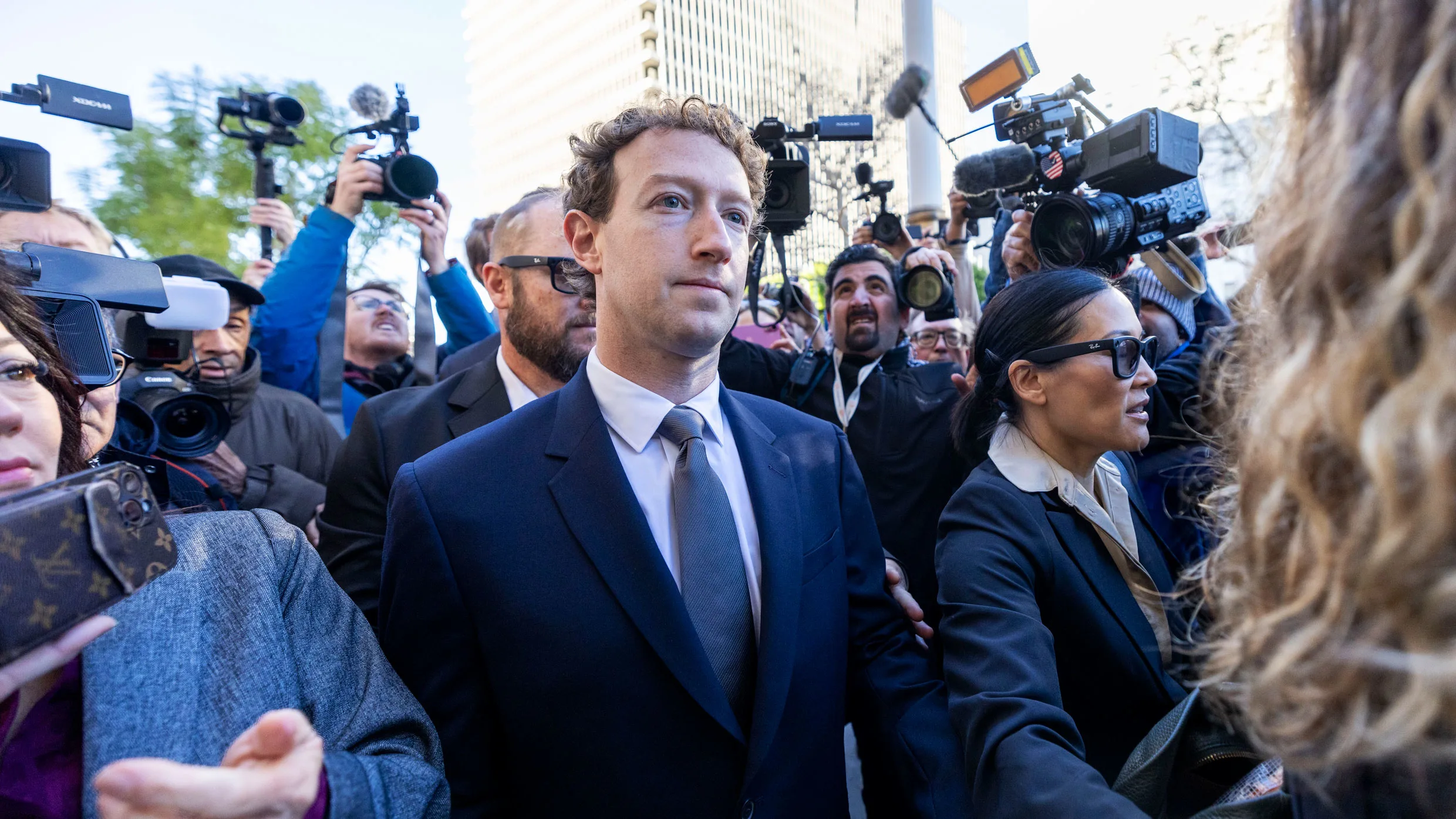
Mark Zuckerberg testified defending Meta's practices in a trial that could determine whether social media companies can be held liable for alleged harms to children. Plaintiffs allege platforms like Instagram and YouTube are intentionally designed to maximize engagement, particularly among children, leading to harmful mental-health effects including addiction. The trial is viewed as a test case for roughly 1,500 similar lawsuits. Meta and Google deny the allegations. A ruling against the companies could change platform interactions, extend legal exposure beyond tech, increase insurance claims for digital addiction, and influence diagnostic and employer responses to technology-related compulsive use.
"The case centers on Meta and Google, with plaintiffs alleging that services like Instagram and YouTube are intentionally designed to keep users, especially kids, engaged-a dynamic they say can lead to harmful mental health effects, including addiction. The trial is widely viewed as a test case for roughly 1,500 similar lawsuits waiting in the wings. Meta and Google deny the charges, with Zuckerberg testifying on Wednesday that "I care about the well-being of teens and kids who are using our services.""
"Insurance companies, for example, could see a rise in claims for digital or social media addiction treatment. For now, social media addiction is not recognized as an official disorder in the Diagnostic and Statistical Manual of Mental Disorders, Fifth Edition, Text Revision (DSM-5-TR), the authoritative guide used to diagnose mental health issues. That makes specialized coverage rare, though insurers do pay for underlying mental health conditions caused or worsened by social media, such as anxiety, depression, or behavioral disorders."
"Still, the DSM-5-TR is published by the American Psychiatric Association, which has warned that "excessive, compulsive or out-of-control use of various types of technologies is an increasing area of concern." Business experts say a legal victory by the plaintiffs could accelerate that shift, making digital addiction a more bigger factor for insurers and employers alike."
Read at Fast Company
Unable to calculate read time
Collection
[
|
...
]