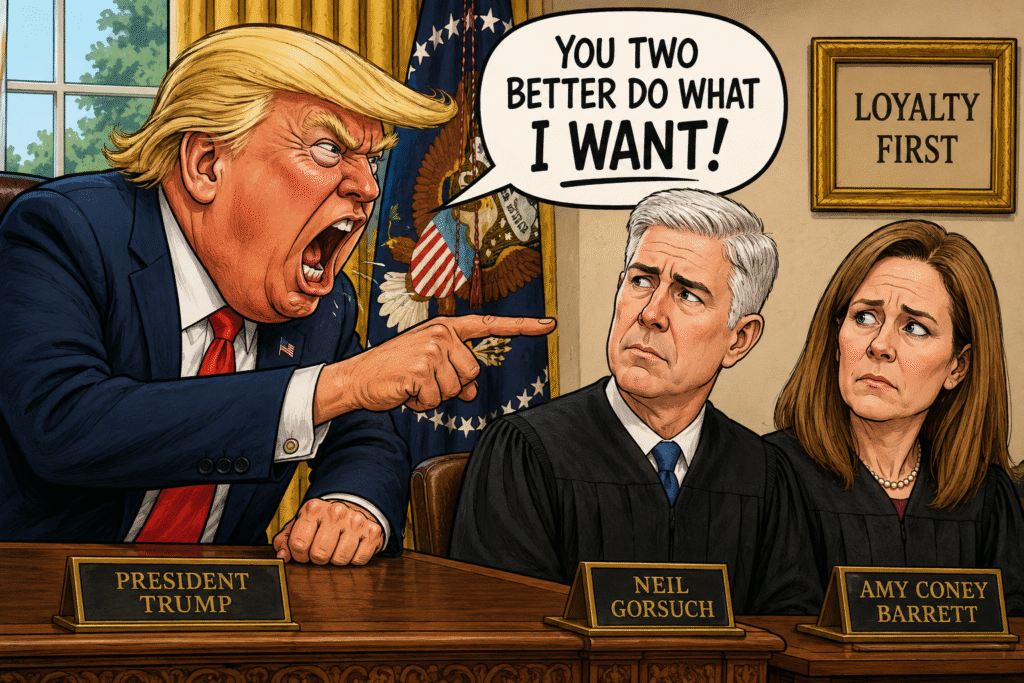
"I 'Love' Justice Neil Gorsuch! He's a really smart and good man, but he voted against me, and our Country, on Tariffs, a devastating move. How do I reconcile this? It continues through Barrett, through a lengthy detour about how Democrat-appointed justices "always remain true to the people that honored them" (they don't, but sure), through a suggestion that he should be the one packing the Court, through a complaint that the Court didn't acknowledge him when he showed up to watch the birthright citizenship arguments, and finally to a remarkable conclusion: "it's really OK for them to be loyal to the person that appointed them.""
"The screed is nominally about the Supreme Court's tariff decision, in which a 6-3 majority that included Trump appointees Neil Gorsuch and Amy Coney Barrett struck down his tariff authority. But it is really about something much simpler: Trump believes that the justices he appointed owe him their votes, and he is furious that they have not delivered them. ... And also some likely tea-leaf reading about the birthright citizenship case that's in front of the Court."
"NOPE, the only thing the justices (or really any member of the bar) owe "loyalty" to is the Constitution. We need to reckon with the ways it is genuinely strange and nakedly authoritarian, despite how commonplace it has become in the Trump regime. A sitting president publicly declaring that his Supreme Court appointees should vote for him out of personal loyalty - not because the law requires it, not because the Constitution demands it, but because he gave them the job - is not normal."
A long post criticizes a Supreme Court tariff decision that went against a president’s position. The post praises appointed justices while expressing anger that they voted against him, framing the issue as personal loyalty owed to the appointing president. It suggests the president should control the Court and complains about the Court’s treatment of him during birthright citizenship arguments. The response rejects the idea of loyalty to an appointing person, stating that legal professionals owe loyalty to the Constitution. It characterizes a president demanding votes based on personal loyalty as abnormal and authoritarian.
Read at Above the Law
Unable to calculate read time
Collection
[
|
...
]