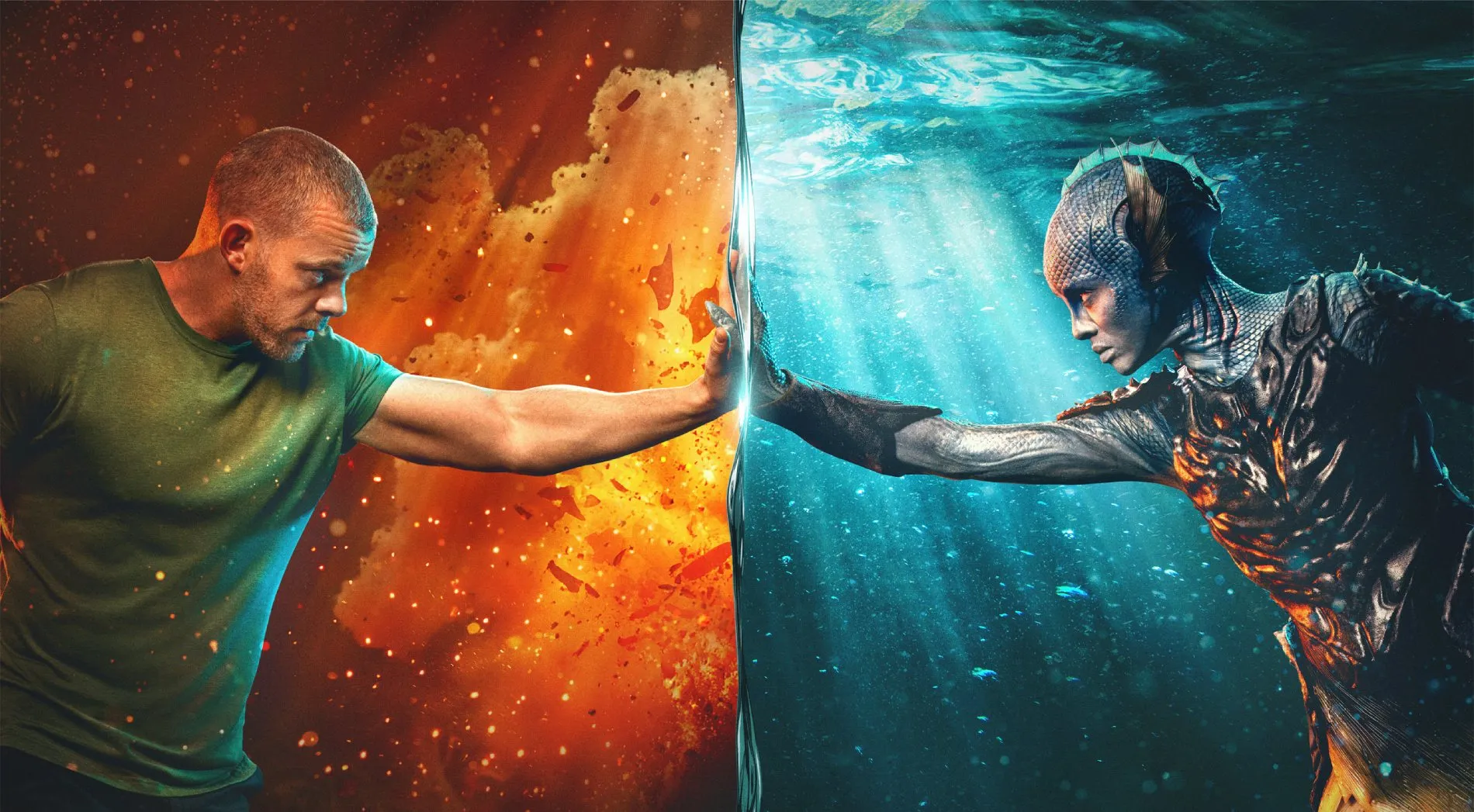
"Despite its apocalyptic framing and world-changing stakes, the first two episodes ground the conflict firmly in the everyman. And that everyman, played by Russell Tovey, is the standout of the series. Tovey's character, Barclay, brings warmth and accessibility to the audience, playing the surrogate for anyone who isn't familiar with the Whoniverse. With a narrative that could very easily become grim and self-serious, Tovey adds a layer of humour and relatability to the show. There's a very deliberate 'everyman' quality to his performance."
"On a technical level, the show is very impressive. The Disney money is very obviously showcased in some of the shots and the CGI monsters are actually, genuinely, a bit creepy. The Sea Devils, now called 'Homo Aqua' in The War Between, have been redesigned for the show and while they do look considerably different from their original design, it's extremely effective."
"The first two episodes of The War Between The Land And The Sea make no attempt to be subtle about the show's central metaphor. We're going through a full climate disaster. It's a direct, urgent allegory and is often blunt in its execution. The show isn't asking us to decode a message or look for hidden meaning, it's demanding we sit with it. And while clunky and exposition-heavy at times, it feels very intentional."
The War Between The Land And The Sea prioritizes character-driven storytelling over spectacle, centring an accessible everyman at the heart of its plot. Russell Tovey's Barclay provides warmth, humour and relatability that anchors the series and eases its darker moments. Production values are high, with noticeable budgetary flourishes, effective CGI and a successful redesign of the Sea Devils as 'Homo Aqua.' The narrative presents an explicit and urgent climate-disaster allegory that is intentionally blunt and often exposition-heavy. Uneasy political choices and uneven treatment of female characters, particularly Salt (Gugu Mbatha-Raw), undermine some of the show's strengths.
Read at PinkNews | Latest lesbian, gay, bi and trans news | LGBTQ+ news
Unable to calculate read time
Collection
[
|
...
]