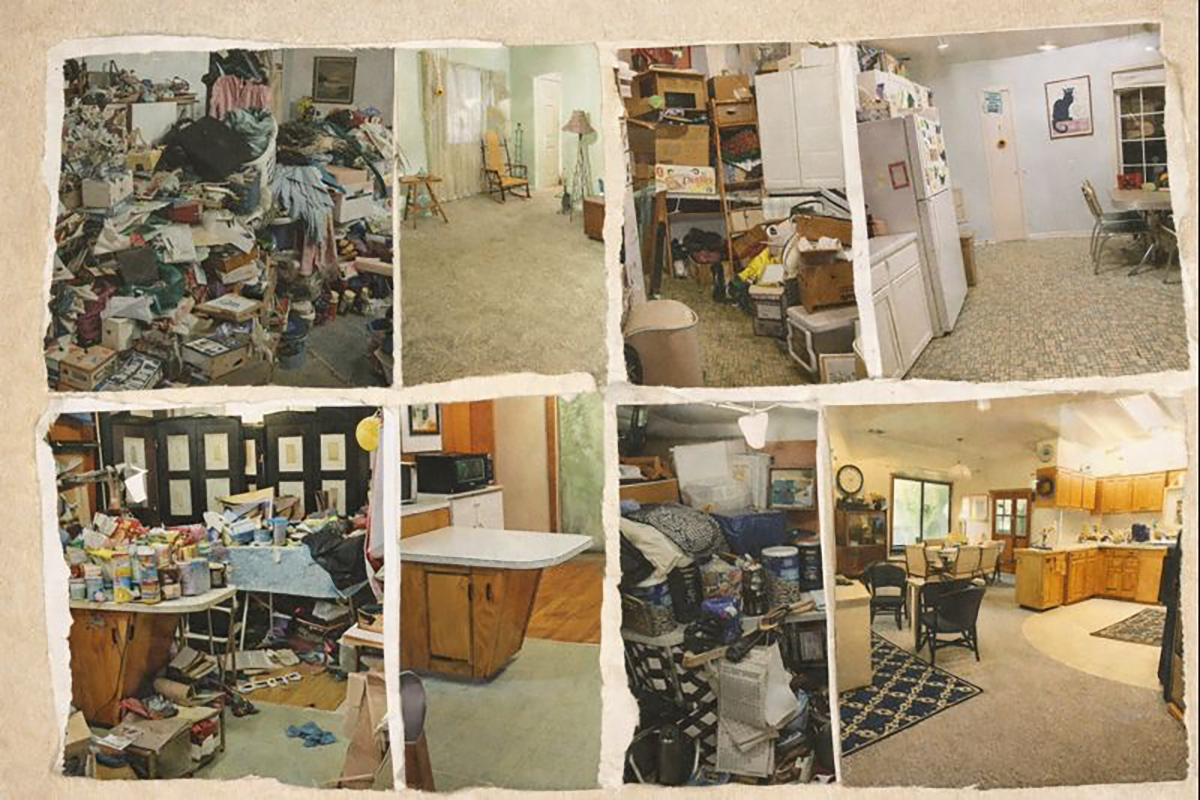
"True American exceptionalism doesn't spring from the nation's statehouses but from its garbage cans. The contemporary US is objectively extraordinary in that virtually anyone, including the extremely poor, can acquire collections of material goods of a volume unprecedented in human history. The consequences of this development have seeped through our thought and topsoil, but to visualize the significance of such expansive attainment, there is no better guide than those we are beckoned to look upon as misusers of this great power."
"Hoarders spanned seven seasons and survived cancellation on two different networks. Two months after the lowest point of the Great Recession, "austerity" was just entering mainstream political discourse when the debut of Hoarders captivated audiences with the shocking spectacle of those whose lives exemplified the opposite. There are almost a hundred episodes of domestic horrors: piles of refuse so large and rancid that they rot through floors. Animal feces putrefying next to the small spaces the hoarder carved out to sleep."
American material abundance allows virtually anyone, including the extremely poor, to amass unprecedented collections of goods. The A&E reality show Hoarders (debut 2009) dramatizes extreme domestic accumulation across nearly a hundred episodes, portraying piles of refuse that rot through floors, animal feces near sleeping spaces, stored gasoline, and dozens of dead cats. The show ran seven seasons and survived cancellations on two networks, debuting as "austerity" entered political discourse. Massive cleaning crews, hoarding intervention professionals, and strained social networks attempt brief intensive cleanouts using industrial dumpsters to salvage homes. Many hoarders, often white working-class women, resist pathologization while linking hoarding to deep-rooted trauma.
Read at The New Inquiry
Unable to calculate read time
Collection
[
|
...
]