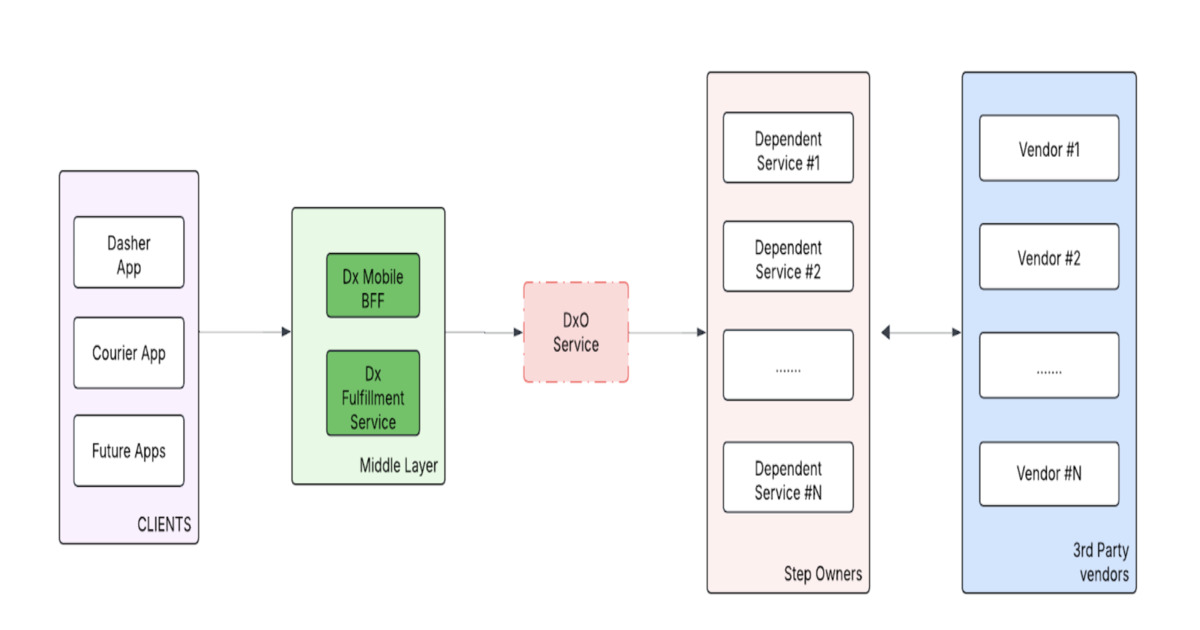
DoorDash redesigned its Dasher onboarding system to address challenges from international expansion. The previous fragmented approach resulted in multiple API versions, country-specific hard-coded flows, duplicated logic, and tightly coupled dependencies that complicated tracking and deployments. The new architecture uses a configurable workflow engine with reusable step modules, each encapsulating business logic, validation rules, vendor integrations, and failure handling. A centralized orchestrator sequences modules based on declarative workflow definitions, allowing country-specific variations through configuration rather than code forks. A unified status map provides a single source of truth for applicant progress, with each module updating standardized status entries, reducing operational risk and maintenance complexity.
"As DoorDash expanded into more countries, onboarding Dashers became harder to manage and less consistent. We redesigned onboarding into a unified, flexible platform that helps us launch new markets faster while delivering a more reliable, localized experience for Dashers worldwide."
"Previously, onboarding logic evolved organically as DoorDash expanded internationally, resulting in multiple API versions, country-specific hard-coded flows, duplicated business logic, and tightly coupled dependencies. Tracking applicant progress required coordinating across disparate tables, increasing operational risk and complicating deployments."
"To address these limitations, DoorDash re-architected onboarding as a configurable workflow engine composed of reusable step modules. Each module encapsulates its own business logic, including validation rules, vendor integrations, completion criteria, and failure handling."
#platform-architecture #workflow-orchestration #global-expansion #microservices #operational-efficiency
Read at InfoQ
Unable to calculate read time
Collection
[
|
...
]