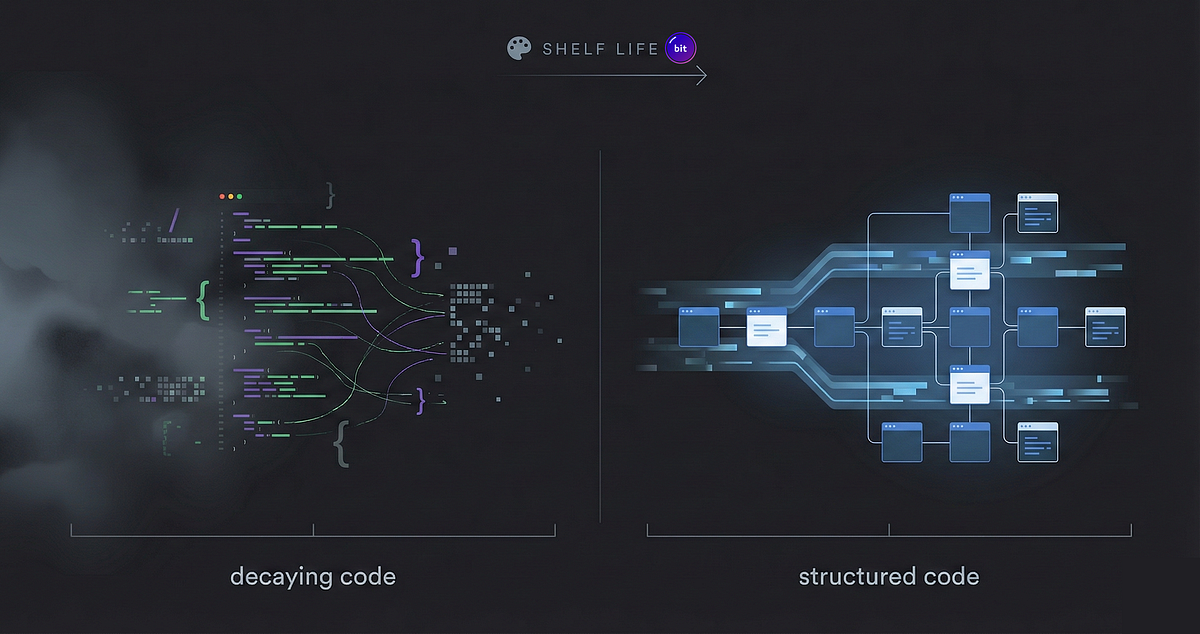
Production platforms built with AI can diverge quickly in maintainability. Some codebases become harder to change within days, while others keep improving. The difference is not the model but the structure of the code that lands in the repository. Teams hit a wall when generated modules work initially, then later require changes that only the original context window understood. Over time, modules become black boxes because there is no surrounding structure that enables safe human or AI modification. Common failure modes include no boundaries, implicit dependencies, missing contracts for inputs, outputs, and failure behavior, and documentation that only restates parameters without explaining purpose, callers, or breakage risks.
"By day two, some codebases are already harder to change than they were yesterday. Others keep getting easier. The difference is never the model. It's what the code lands in. The teams we work with that hit a wall? It's always the same story. Someone generated a module (maybe 200 lines, maybe 600. Doesn't matter). It worked. Passed tests. Shipped. A few days later someone needs to change it and realizes the only thing that understood this code was the context window that wrote it."
"That module is now a black box. The code isn't bad. There's just no structure around it that lets a human or a different AI session touch it safely. What we mean by "black box" Not code you can't read. Code where reading it doesn't give you enough to change it.We see the same failure modes over and over:"
"No boundaries. A notification system that handles email, SMS, push, and webhooks in one module. Everything touches everything. You want to swap the email provider? Good luck - it shares state with SMS logic, and that relationship isn't declared anywhere. Implicit dependencies. The module imports a user service, a template engine, a queue. How do they connect? The only documentation is the runtime behavior. So to understand it, you either run it or read all of it."
"Missing contracts. What does `sendNotification()` accept? What does it return? What happens on failure? AI-generated code often has clean implementations with no explicit interface. The "contract" is just whatever the current code happens to do. Docs that explain nothing. Generated JSDoc: `@param message the message to send`. Yeah, I can see that. What I need to know is why this function exists, what calls it, and what breaks if I change it."
#ai-assisted-development #code-maintainability #modular-architecture #api-contracts #software-documentation
Read at Medium
Unable to calculate read time
Collection
[
|
...
]