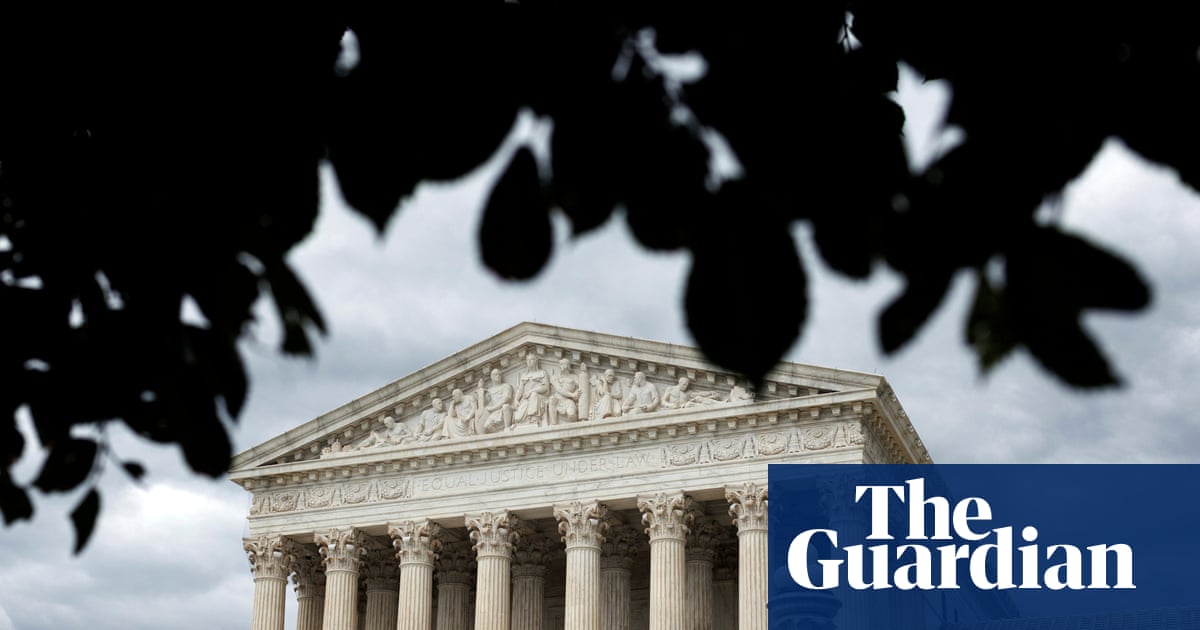
Terry Pitchford, a Black man on death row in Mississippi, won a Supreme Court ruling overturning his capital murder conviction. The Court ruled 5-4 that the trial judge did not give Pitchford’s lawyer a sufficient opportunity to rebut the prosecutor’s stated race-neutral reasons for striking Black jurors. Prosecutors removed four of five Black jurors during jury selection, leaving a jury with 11 white jurors and one Black juror that convicted Pitchford and sentenced him to death. The Court revived a federal judge’s decision invalidating the conviction based on limits placed on counsel’s ability to question whether the strikes were based on race. The ruling centers on Batson v. Kentucky requirements for evaluating discriminatory jury selection.
"The justices sided with Pitchford in a 5-4 vote. Pitchford, now 40, was just 18 when he and another teen robbed a grocery store in 2004. The other teen, who fired fatal shots, was still a minor and ineligible for the death penalty, but Pitchford was convicted of capital murder and sentenced to death. The focus of the supreme court ruling was on jury selection in Pitchford's case, when state prosecutors removed four out of five Black jurors."
"A jury composed of 11 white jurors and one Black juror would later convict Pitchford and sentence him to death. The now retired prosecutor Doug Evans, who the Associated Press notes had a history of dismissing Black jurors for discriminatory reasons, had excused the four other Black jurors. Pitchford's attorney objected to the strikes during the trial, but the judge, Joseph Loper, allowed them."
"The trial court did not afford Pitchford's counsel a sufficient opportunity to rebut the prosecutor's proffered race-neutral reasons for striking the four Black jurors and never determined whether the prosecutor's stated reasons were pretextual, Justice Brett Kavanaugh wrote in the court's majority opinion. The supreme court's decision revives a federal judge's ruling that invalidated Pitchford's conviction on grounds that his lawyer was not allowed to pursue a line of questioning that Evans's jury selection was based on race."
"During oral arguments in March, several supreme court justices appeared skeptical of whether Loper had sufficiently applied a Batson challenge, which refers to a 1986 ruling in Batson v Kentucky, in which the court reaffirmed that it is unconstitutional to keep Black people off juries due to their race. A Batson challenge triggers a three-step process in which the objecting party must first show that there i"
Read at www.theguardian.com
Unable to calculate read time
Collection
[
|
...
]