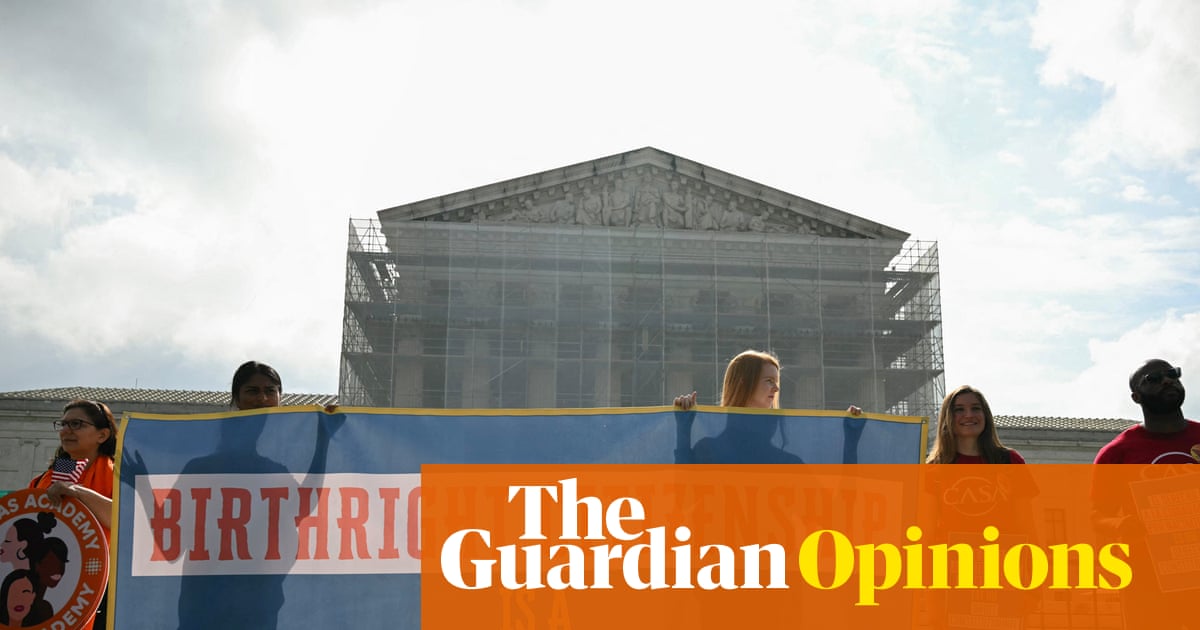
"What does it mean to be an American? Will we adhere to the best of American history and protect the values of equal citizenship and opportunity? In early America, like today, people born on US soil were citizens, even if their parents were immigrants."
"Before the American civil war, this principle of equal citizenship was woefully incomplete. The founders declared that all men are created equal, yet the original constitution tacitly accepted the sin of slavery and counted enslaved human beings as three-fifths of a person."
"The court rejected the traditional birthright rule when it came to Black Americans, claiming that they could never be US citizens even if they were born free on US soil. The decision helped precipitate the civil war."
"After the war, Congress drafted the citizenship clause of the fourteenth amendment to eliminate Dred Scott's mistake and instead enshrine birthright citizenship into the text of the constitution."
The challenge to Donald Trump's birthright citizenship executive order emphasizes the importance of equal citizenship and opportunity in America. Historically, individuals born on US soil were granted citizenship, a principle rooted in common law. This principle has evolved, especially after the Civil War, to ensure that all individuals, regardless of their parents' immigration status, are recognized as citizens. The Dred Scott decision highlighted the contradictions in citizenship rights, leading to the Fourteenth Amendment's citizenship clause, which aimed to rectify past injustices and affirm birthright citizenship for all born in the US.
Read at www.theguardian.com
Unable to calculate read time
Collection
[
|
...
]