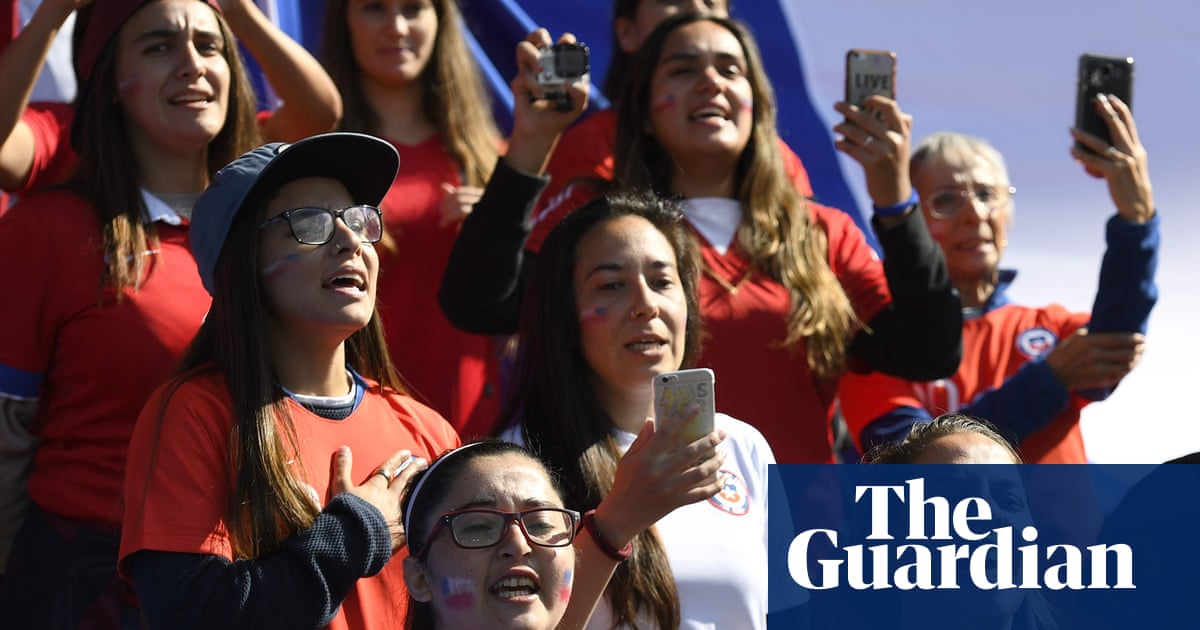
"The Chilean players' association officially became a union in December, and its president, Javiera Moreno, believes there needs to be women's representation in players' unions around the world. We want this movement to become massive, says the former Universidad Catolica captain. Our goal is to spread this to other countries. I don't know if in other places the path will be to have a specific union for women. This was needed here, but I think there needs to be at least representation of women's players within every country's footballers' union."
"The National Women's Football Players Association (ANJUF) has existed for nearly a decade, but in December its legal status changed. Under labour law, clubs and the federation are now obliged to engage in dialogue and negotiate contracts, benefits and other labour issues collectively. Although Moreno believes ANJUF's relationship with clubs and the federation was already collaborative, sporting institutions are now legally obliged to listen to them."
"That collaboration was always our main tool, and now it will still be like that, she says. Meaning that we continue to talk with the clubs, but our goal is also to build our role as a union, which is not only about dealing with players' contracts, but also about the professionalisation of our league."
The National Women's Football Players Association (ANJUF) officially became a union in December, granting it legal status under labour law and obliging clubs and the federation to engage in collective dialogue and negotiations. Javiera Moreno calls for women's representation within players' unions worldwide and seeks to spread the model to other countries. ANJUF began organising in 2016 and its founders included leading Chilean players. The organisation has secured medical care for professional players and developed policies to address abuse, harassment and precarious working conditions. In 2022, the Chilean government passed a law.
Read at www.theguardian.com
Unable to calculate read time
Collection
[
|
...
]